

Post Detail
BackAxon ERP Official
12 weeks ago
Why Retail Stores Run Out of Stock Even When Inventory Shows Available
Running Out of Stock Doesn't Always Mean You're Out of Inventory
One of the most frustrating situations in retail happens when a customer asks for a product, your inventory system shows it's available, but your staff can't find it anywhere in the store.
The customer walks away without making a purchase. Your sales team loses confidence in the inventory records. Meanwhile, someone from purchasing places another order because the system suggests the stock should still be available but no one knows where it actually is.
This isn't simply a stock shortage.
It's an inventory visibility problem.
Many retail businesses unknowingly lose sales every week because their inventory records don't accurately reflect what's happening inside the warehouse, on the sales floor, or across different storage locations. Products may physically exist, but if employees can't locate them when customers need them, those products generate no revenue.
As a retail business grows, inventory moves through several stages before reaching the customer. Products are purchased, received, stored, transferred between locations, sold through the POS, adjusted during stock counts, and sometimes returned. If even one of these activities isn't recorded correctly, inventory accuracy gradually begins to decline.
The result is a business that appears to have stock on paper while customers continue hearing the words every retailer hates:
"Sorry, it's showing in the system, but we can't find it."
Why Inventory Shows Available but Products Can't Be Found
Inventory problems rarely begin on the sales floor.
Most stock discrepancies start much earlier during everyday operational activities that seem too small to cause serious problems.
Inventory Errors Often Start During Receiving
When products arrive from suppliers, every quantity, item variation, and damaged product should be verified before inventory is updated.
If inventory is recorded incorrectly during the material receiving process, every report generated afterward becomes less reliable. One incorrect receiving transaction can affect inventory records for weeks before anyone notices the mistake.
Products Move, But Inventory Records Don't
Retail businesses constantly move products between warehouses, storage rooms, display shelves, and different branches.
Without a controlled inventory transfer process, products may physically leave one location while the system still shows them there. Staff continue searching in the wrong warehouse, purchasing assumes the products have been sold, and unnecessary replacement orders are placed.

Small Inventory Errors Continue Growing
Businesses also create inventory discrepancies when manual quantity changes are made without proper documentation.
Missing stock counts, undocumented damage, manual corrections, and delayed updates slowly reduce inventory accuracy until employees stop trusting the system altogether.
Over time, retailers begin experiencing problems such as:
- Products showing available but missing from shelves.
- Duplicate purchasing because existing stock cannot be located.
- Fast-selling products appearing out of stock unnecessarily.
- Staff spending valuable time searching instead of serving customers.
- Customer orders being delayed because inventory cannot be verified.
- Poor purchasing decisions based on inaccurate inventory data.
At this stage, the problem is no longer about missing products. It affects purchasing decisions, warehouse efficiency, customer satisfaction, and ultimately the profitability of the entire retail business.
How Well-Managed Retail Stores Prevent Stock Discrepancies
Retailers that consistently maintain accurate inventory don't simply count stock more often. They build processes that make inventory accurate from the very beginning.
Instead of fixing problems after customers complain, they make sure every inventory movement is recorded correctly before it creates a larger issue.
Start With Accurate Inventory Receiving
Inventory accuracy begins the moment products enter the business.
Every delivery should be checked against the purchase order before stock is added to inventory. Quantities, damaged items, missing products, and supplier documents should all be verified during the material receiving process.
When inventory enters the system correctly, every process that follows becomes more reliable.
Record Every Inventory Transfer
As retail businesses grow, inventory constantly moves between warehouses, stores, stock rooms, and display areas.
If these movements aren't recorded properly through an inventory transfer process, products may still appear available in one location even though they've already been moved elsewhere.
Accurate transfer records allow every department to know exactly where inventory is located, reducing duplicate purchases and preventing unnecessary stock shortages.
Keep Inventory Records Accurate
No inventory system stays perfectly accurate forever.
Damaged products, counting mistakes, expired inventory, and operational errors occasionally create differences between physical stock and system records.
Rather than making manual corrections without documentation, successful retailers perform controlled inventory adjustments whenever discrepancies are discovered. This keeps inventory reports reliable while maintaining complete accountability for every stock change.
Complete Inventory Visibility Improves Every Business Decision
Inventory isn't only about knowing how many products you own.
It's about knowing:
- where products are located,
- which warehouse has available stock,
- what has already been sold,
- what is waiting to be received,
- and what needs to be reordered.
A centralized inventory management system gives management complete visibility across purchasing, warehouses, and inventory movements, helping retailers make decisions using accurate business data instead of assumptions.

How Axon ERP Helps Retailers Maintain Accurate Inventory
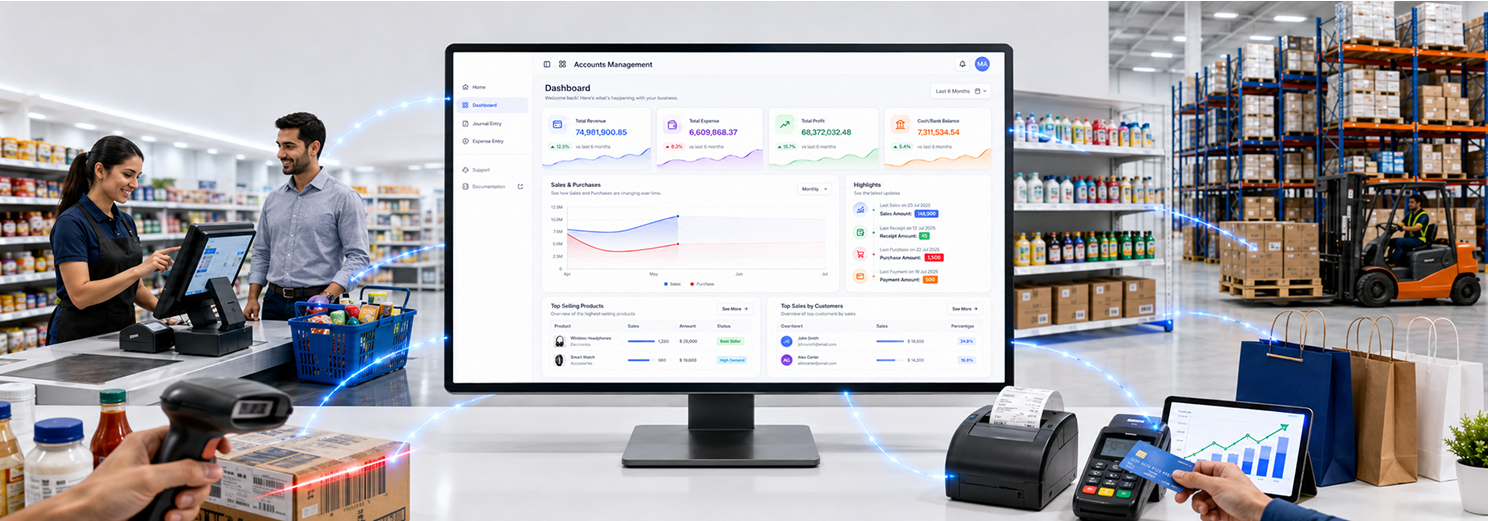
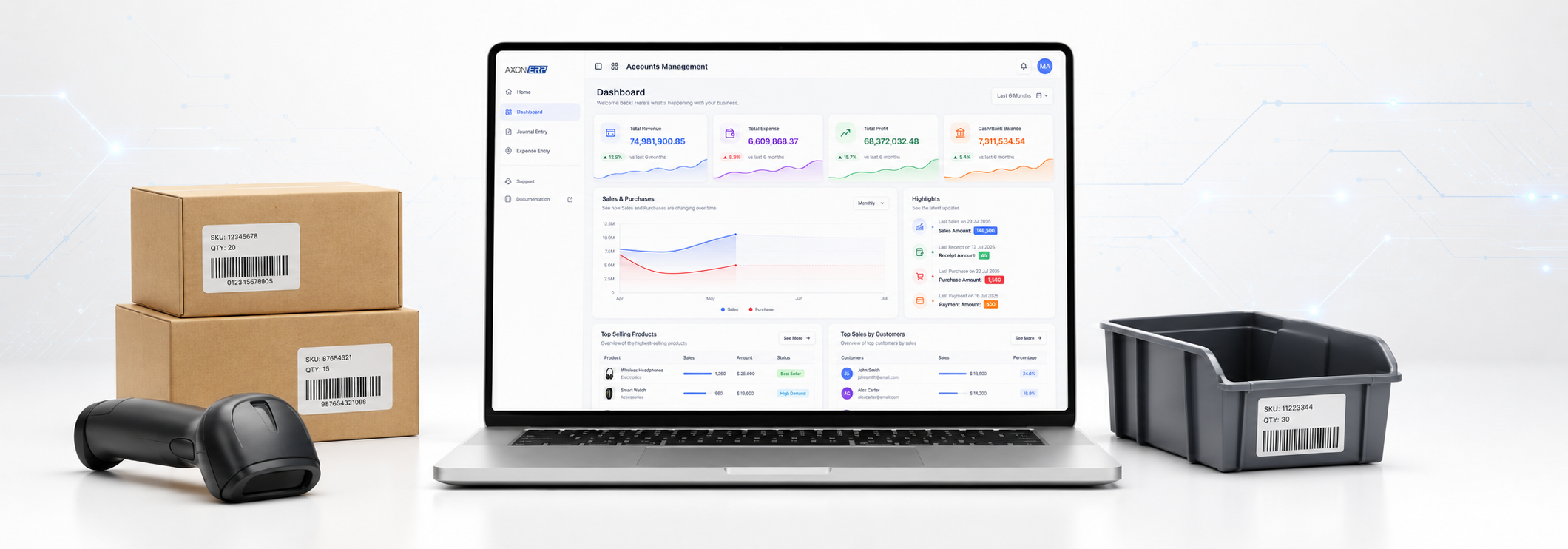
Axon ERP connects purchasing, warehouse operations, inventory management, and retail sales within a single platform.
Instead of updating multiple spreadsheets or separate software, every inventory transaction is automatically recorded as products are received, transferred, adjusted, sold, or returned.
Management can instantly identify inventory discrepancies, monitor stock availability across multiple locations, and reduce duplicate purchasing caused by inaccurate inventory records.
Because the system is directly connected with POS software, every completed sale immediately updates inventory, helping retailers maintain accurate stock levels while reducing overselling and improving customer service.
Whether a business operates one retail outlet or multiple branches, every department works from the same real-time inventory information.
Final Thoughts
Retail stores don't usually lose customers because products were never purchased.
They lose customers because products cannot be located when customers are ready to buy.
Accurate inventory visibility depends on disciplined receiving procedures, properly tracked warehouse movements, controlled inventory adjustments, and systems that keep purchasing, inventory, warehouse operations, and sales connected.
Businesses that improve these processes reduce unnecessary purchasing costs, improve customer satisfaction, increase inventory accuracy, and build a stronger foundation for long-term growth. Industry research from the National Retail Federation also shows that improving inventory accuracy helps retailers reduce stockouts and improve customer satisfaction.
With Axon ERP, retailers gain complete visibility over every inventory movement while connecting purchasing, warehouse management, inventory control, and POS operations into one integrated system helping every product move efficiently from supplier to shelf, and from shelf to customer.