

Post Detail
BackAxon ERP Official
16 weeks ago
How ERP Software Simplifies Material Receiving and Warehouse Operations
Managing inventory does not start when products are sold. It starts when materials enter the warehouse.
Many businesses struggle with missing stock records, delayed inventory updates, receiving errors, and poor warehouse visibility because their receiving process is handled manually. These issues often create inventory discrepancies that affect purchasing, sales, production planning, and financial reporting.
This is where material receiving in ERP software becomes essential.
A modern ERP system allows businesses to record incoming inventory, update stock levels automatically, maintain warehouse accuracy, and create a complete audit trail for every inventory movement.
Whether you operate a manufacturing facility, wholesale distribution company, retail business, or project-based organization, a structured receiving process helps maintain accurate inventory records and efficient warehouse operations.
What is Material Receiving in ERP Software?
Material receiving in ERP software is the process of recording inventory items when they arrive at a warehouse, store, production facility, or distribution center.
The receiving process typically includes:
- Receiving inventory items
- Recording quantities
- Updating warehouse stock
- Tracking responsible employees
- Maintaining transaction records
- Generating accounting entries
- Supporting inventory reporting
Instead of updating inventory manually through spreadsheets, ERP software automatically updates inventory records as soon as materials are received.
This improves inventory accuracy and reduces operational errors.
Why Material Receiving is Important
Many businesses focus heavily on sales and purchasing while overlooking the receiving process.
However, inaccurate receiving records often cause:
- Incorrect stock balances
- Inventory shortages
- Duplicate purchases
- Warehouse confusion
- Reporting inaccuracies
- Financial discrepancies
A structured receiving workflow ensures inventory data remains accurate throughout the business.
For organizations using an Inventory Setup in ERP Software framework, proper receiving procedures help maintain consistency across inventory transactions.
Common Challenges in Warehouse Receiving Operations
As businesses grow, warehouse teams often encounter several operational challenges.
Delayed Inventory Updates
When received items are not recorded immediately, stock levels become inaccurate.
Sales teams may sell unavailable products while purchasing teams may reorder items that already exist in stock.
Lack of Inventory Visibility
Without centralized inventory tracking, businesses struggle to determine:
- What was received
- When it was received
- Who received it
- Which warehouse contains the stock
Manual Data Entry Errors
Manual inventory processes increase the risk of:
- Quantity mistakes
- Duplicate entries
- Missing transactions
- Incorrect inventory valuation
ERP software helps eliminate these challenges through automation and real-time inventory updates.
Key Features of Material Receiving in ERP Software
Warehouse-Based Receiving
ERP systems allow users to receive inventory directly into a selected warehouse.
This ensures stock is recorded in the correct location and remains visible across the organization.
Businesses using Warehouse Management in ERP Software can maintain accurate inventory balances across multiple warehouse locations.
Employee Tracking
Every receiving transaction can be linked to a responsible employee.
This improves accountability and provides a clear audit trail for inventory operations.
Item-Level Inventory Recording
Users can record:
- Item name
- Description
- Quantity
- Unit of Measure (UOM)
- Costing method
- Unit price
Accurate item records depend heavily on a well-structured Item Management in ERP Software process.
Real-Time Inventory Updates
Once materials are received and approved, inventory levels update automatically.
This gives departments immediate access to current stock information.
Accounting Integration
Modern ERP systems automatically generate accounting entries related to inventory transactions.
This improves inventory valuation and supports accurate financial reporting.
Organizations using an Accounts & Finance Module benefit from synchronized inventory and accounting records.
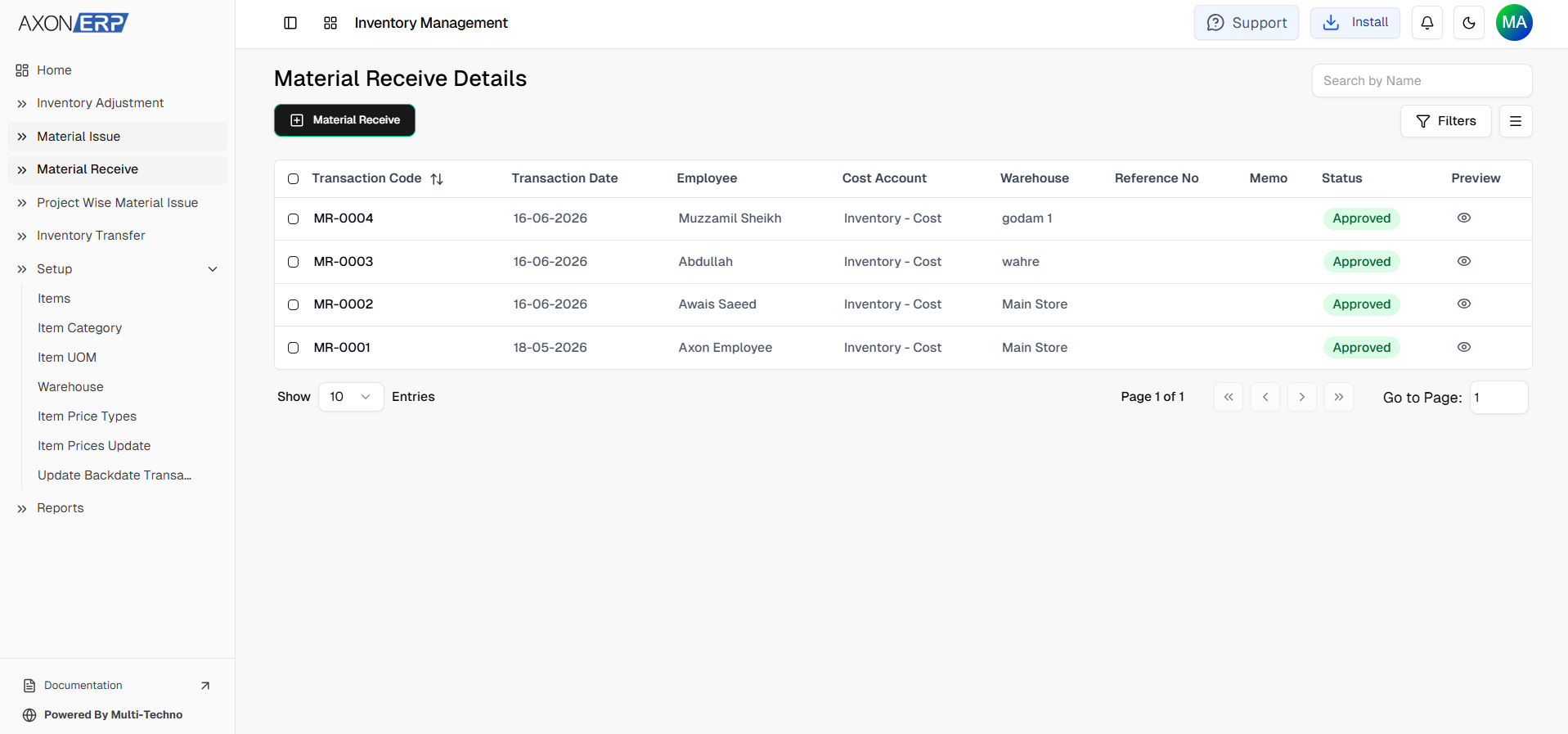
Material Receiving in Axon ERP
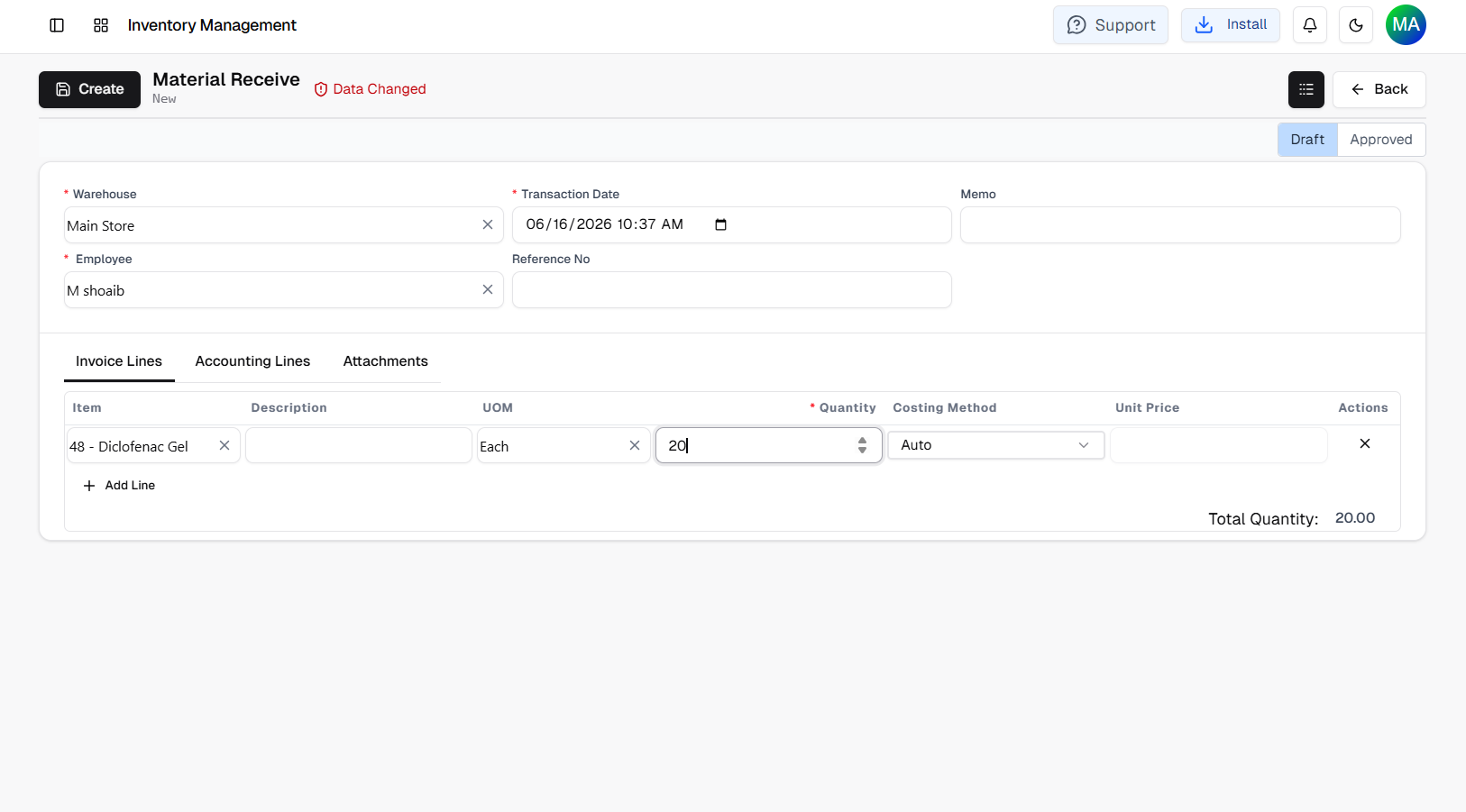
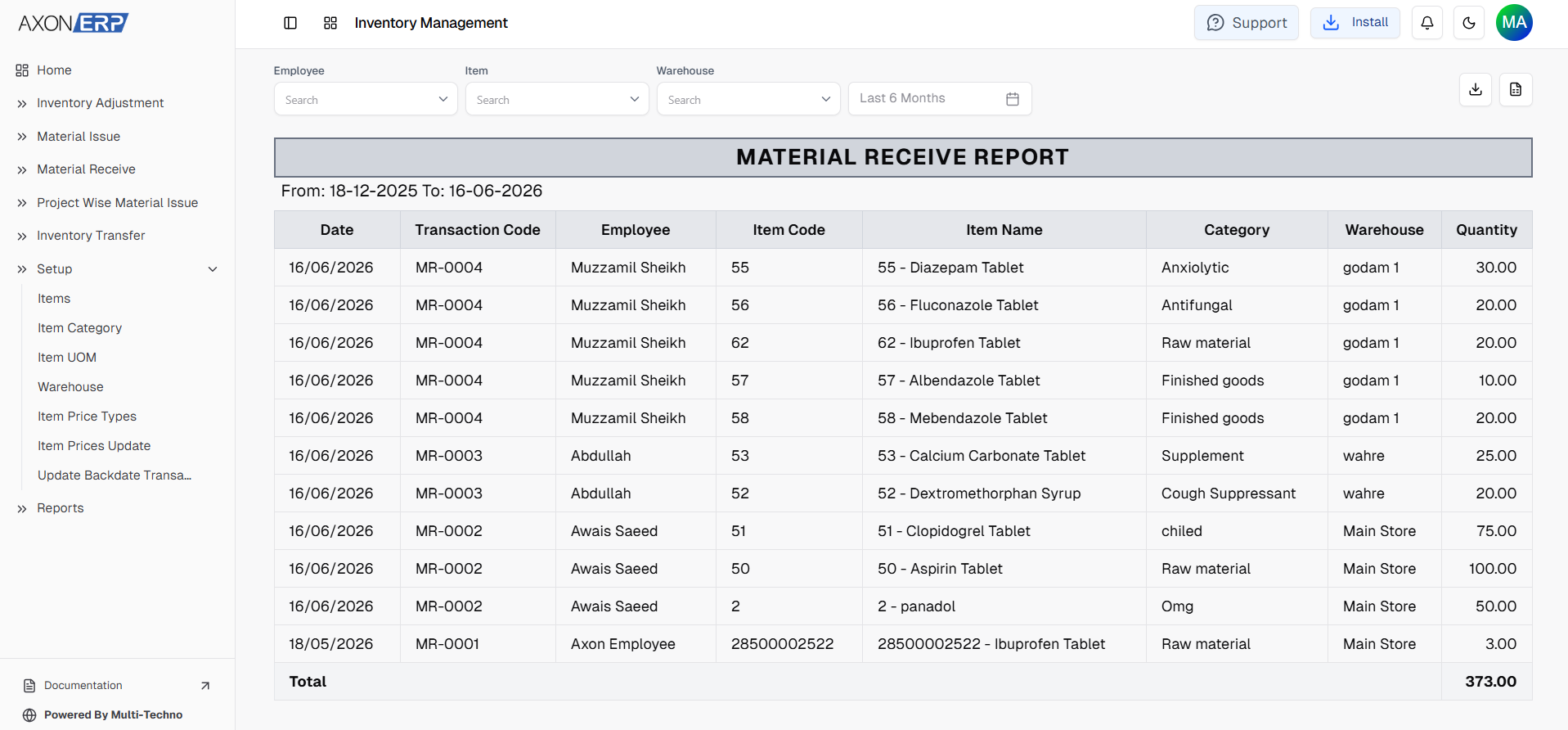
Axon ERP provides a dedicated Material Receive feature that helps businesses maintain accurate inventory records and warehouse visibility.
Users can:
- Select the warehouse
- Record transaction dates
- Assign responsible employees
- Add inventory items
- Enter quantities and prices
- Attach supporting documents
- Review accounting entries
Each transaction can move through different approval stages, helping organizations maintain stronger inventory controls.
This ensures inventory records remain reliable and auditable.
How Material Receiving Supports Different Industries
Manufacturing Businesses
Manufacturers regularly receive raw materials required for production.
Accurate receiving records help maintain inventory availability while supporting production planning and material consumption tracking.
Businesses operating in the Manufacturing Industry rely on receiving accuracy to avoid production delays and inventory shortages.
Wholesale & Distribution Companies
Wholesale businesses manage large volumes of incoming inventory from suppliers.
A structured receiving process improves warehouse efficiency and inventory visibility across multiple locations.
Organizations in the Wholesale & Distribution Industry often depend on real-time receiving data to fulfill customer orders quickly and accurately.
Retail Businesses
Retail companies use receiving processes to maintain product availability and improve stock accuracy across stores and warehouses.
Accurate inventory records help reduce stockouts and improve customer satisfaction.
Best Practices for Material Receiving
Businesses can improve warehouse performance by following a few simple practices:
- Record inventory immediately upon receipt
- Verify quantities before approval
- Assign responsibility to warehouse staff
- Maintain supporting documentation
- Review inventory discrepancies regularly
- Standardize receiving procedures
- Conduct periodic inventory audits
Following recognized inventory management best practices helps organizations maintain inventory accuracy while improving warehouse efficiency.
Final Thoughts
Material receiving in ERP software is one of the most important processes in inventory management.
A structured receiving workflow helps businesses maintain accurate stock levels, improve warehouse visibility, reduce inventory errors, and strengthen operational control.
As organizations grow, automated receiving processes become increasingly important for maintaining inventory accuracy and supporting efficient warehouse operations.
Businesses that implement ERP-based material receiving create a stronger foundation for inventory management, warehouse control, purchasing operations, and long-term business growth.