

Post Detail
BackAxon ERP Official
16 weeks ago
Item Management in ERP Software: Complete Guide to Inventory Control
Managing inventory becomes increasingly challenging as businesses grow. Without a structured system, companies often face duplicate item records, inaccurate stock levels, pricing inconsistencies, purchasing errors, and inventory tracking issues.
This is where item management in ERP software becomes essential. Businesses using a structured Inventory Management System can maintain accurate inventory records while improving operational efficiency
An ERP system helps businesses create, organize, and manage inventory items from a centralized platform. Whether you operate a manufacturing company, wholesale distribution business, retail store, or service organization, effective item management improves inventory accuracy, operational efficiency, and reporting reliability.
What is Item Management in ERP Software?
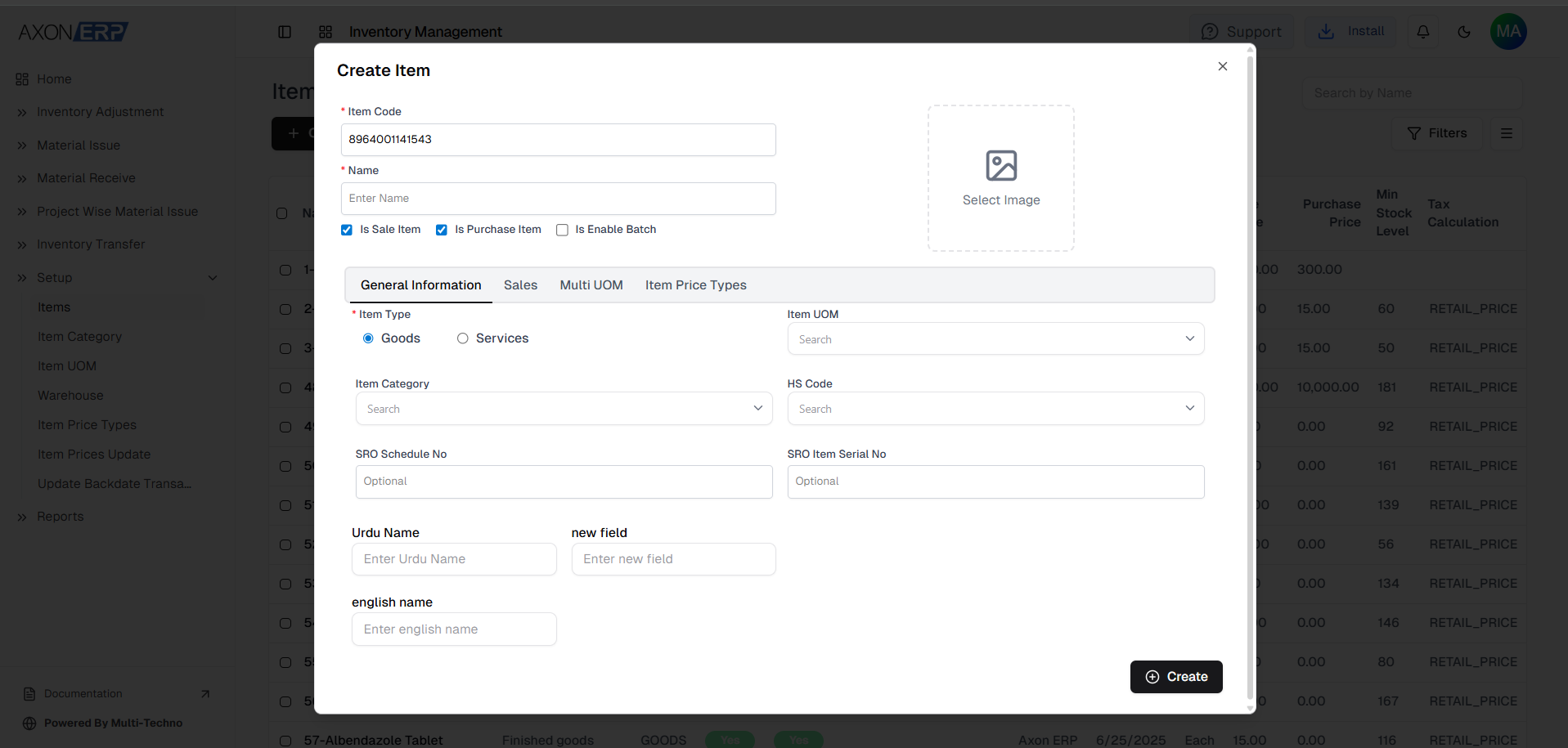
Item management in ERP software is the process of creating, organizing, tracking, and maintaining inventory items within an ERP system.
Every inventory item is stored in a centralized database where businesses can manage:
- Item Code
- Item Name
- Item Category
- Item Type
- Unit of Measure (UOM)
- Sale Price
- Tax Type
- Minimum Stock Level
This information becomes the foundation for inventory transactions, purchasing, sales processing, warehouse management, stock reporting, and financial tracking.
A properly structured item management system ensures consistency across all business operations.
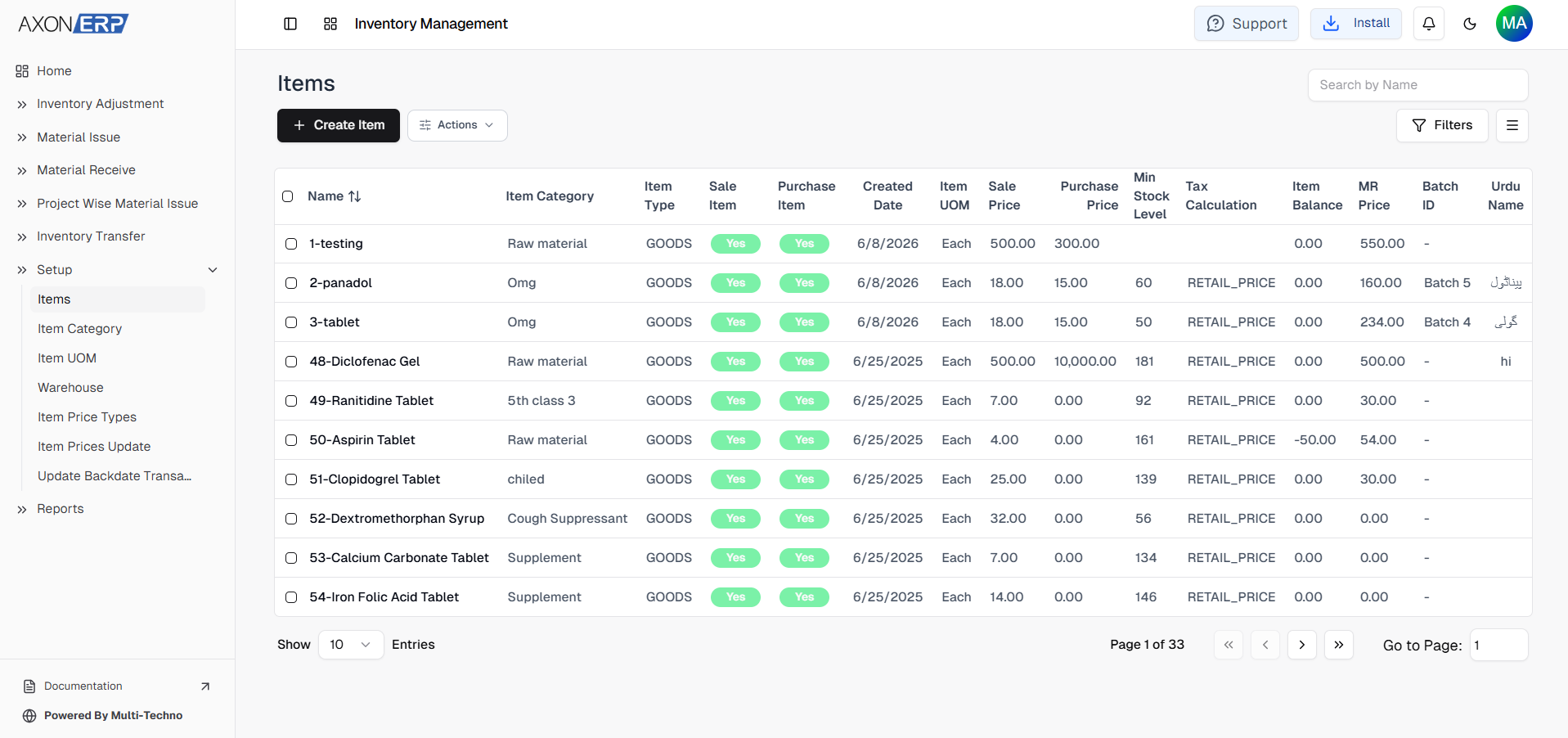
Before businesses start creating inventory items, they should first establish proper company structures and system configurations through effective ERP setup.
Why Item Management is Important
Many businesses struggle with inventory issues because item records are poorly organized.
Common problems include:
- Duplicate item entries
- Incorrect stock quantities
- Pricing inconsistencies
- Inventory shortages
- Reporting errors
- Purchasing mistakes
A well-designed ERP item management system helps businesses maintain accurate inventory records while improving visibility across departments.
It also provides better control over inventory movement and stock planning.
Key Features of ERP Item Management
Centralized Item Database
ERP software stores all inventory items in a single centralized location.
Each item contains important information such as:
- Item code
- Item description
- Item category
- Unit of measure
- Pricing information
- Tax settings
This ensures that every department works with the same inventory data. Access to inventory items should also be controlled through proper user permissions and role assignments.
Item Categories
Item categories help businesses organize inventory for better management and reporting.
Examples include:
- Raw Materials
- Finished Goods
- Spare Parts
- Office Supplies
- Services
Proper categorization improves inventory control and simplifies reporting.
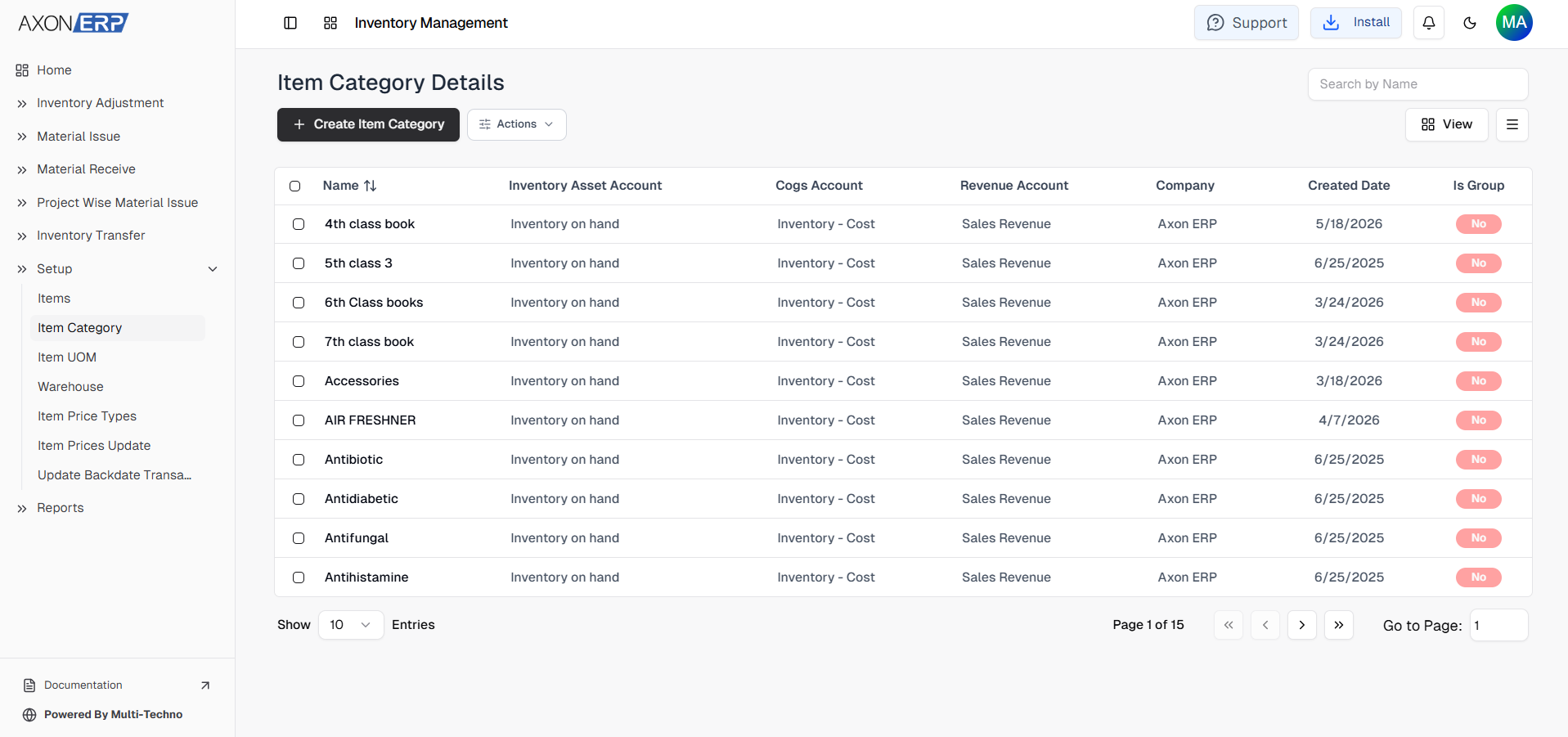
Manufacturing businesses often categorize inventory into raw materials, work-in-progress inventory, and finished goods to improve production planning.
Unit of Measure (UOM) Management
Different products may be purchased, stored, and sold using different units.
ERP systems allow businesses to define units such as:
- Pieces
- Boxes
- Cartons
- Kilograms
- Liters
Businesses managing inventory across multiple warehouses often rely on standardized units to maintain consistency.
Pricing & Tax Configuration
Businesses can configure:
- Sale prices
- Retail prices
- Tax settings
- Pricing structures
This helps maintain consistency across sales and purchasing transactions.
Minimum Stock Level Control
Businesses can define minimum stock levels for inventory items.
When stock falls below the required level, the ERP system can highlight low-stock situations and help teams take timely purchasing actions.
This reduces stockout risks and improves inventory planning.
Item Management in Axon ERP
Axon ERP provides a comprehensive item management system that helps businesses maintain accurate inventory records and operational control.
Users can:
- Create inventory items
- Define item categories
- Configure units of measure
- Set pricing information
- Manage tax configurations
- Define minimum stock levels
The item management module integrates with inventory transactions, sales operations, purchasing workflows, warehouses, and accounting processes.
This allows businesses to maintain complete inventory visibility from a single platform.
How Item Management Connects with Other ERP Modules
Item management serves as the foundation of inventory operations.
For example:
- Warehouses store inventory items.
- Sales transactions use item pricing and stock information.
- Purchase transactions use item records for procurement.
- Inventory reports rely on item data for stock analysis.
- Financial records use item values for inventory valuation.
Businesses using an Inventory Management System can maintain accurate stock records while improving operational efficiency.
Similarly, inventory valuation and stock-related transactions remain connected with the Accounts & Finance Module, ensuring accurate financial reporting.
For manufacturing companies, structured item management is critical for controlling raw materials, finished goods, and production inventory throughout the supply chain.
Item Management for Different Industries
Different industries use item management in different ways.
Manufacturing Industry
Manufacturers use item management to track:
- Raw materials
- Work-in-progress inventory
- Finished goods
- Production-related stock
Accurate item records help improve production planning and inventory control.
Wholesale Distribution
Wholesale businesses manage large product catalogs and multiple warehouses.
A structured item management system helps maintain accurate stock records across locations while improving order fulfillment.
Retail Businesses
Retail stores rely on item management to maintain product availability, pricing consistency, and inventory visibility.
Proper inventory control helps reduce stock shortages and improve customer satisfaction.
Best Practices for Managing Inventory Items
To maintain inventory accuracy, businesses should:
- Create unique item codes
- Avoid duplicate item creation
- Organize items into proper categories
- Standardize units of measure
- Review pricing regularly
- Define minimum stock levels
- Maintain accurate item descriptions
Following inventory management best practices helps businesses improve inventory accuracy and operational efficiency.
Final Thoughts
Item management in ERP software is a critical part of successful inventory control.
A structured inventory system helps businesses organize products, improve stock visibility, maintain pricing consistency, and streamline inventory operations.
As organizations grow, effective item management becomes essential for maintaining inventory accuracy, supporting better decision-making, and ensuring long-term business scalability. Businesses that invest in proper item management establish a stronger foundation for inventory control, warehouse operations, purchasing processes, and financial reporting.
Businesses looking to improve inventory control, warehouse operations, and stock visibility can explore Axon ERP's complete inventory management capabilities.
Ready to Improve Your Inventory Management?
Discover how Axon ERP helps businesses manage inventory items, warehouses, stock levels, pricing, and reporting from a single platform.
Explore Axon ERP Pricing!!!