

Post Detail
BackAxon ERP Official
17 weeks ago
Warehouse Management in ERP Software: Improve Inventory Control Across Locations
Managing inventory across multiple warehouses becomes difficult when businesses rely on manual records or disconnected systems. Many companies struggle with stock mismatches, delayed transfers, inventory confusion, and inaccurate warehouse reporting.
This is where warehouse management in ERP software becomes essential.
A modern ERP system helps businesses manage inventory across different warehouses while maintaining accurate stock records, inventory visibility, and operational control.
Whether you manage retail stores, manufacturing units, distribution centers, or multiple storage locations, a proper warehouse management ERP system improves inventory accuracy and operational efficiency.
What is Warehouse Management in ERP Software?
Warehouse management in ERP software is the process of organizing, tracking, and controlling inventory across different warehouse locations within a centralized ERP system.
It helps businesses:
- manage warehouse locations
- track inventory movement
- transfer stock between warehouses
- monitor stock availability
- improve inventory accuracy
- control warehouse operations
- generate warehouse reports
A centralized warehouse inventory system ensures that inventory data remains accurate across all departments and locations.
Why Warehouse Management is Important
Without proper warehouse management, businesses often face:
- stock shortages
- duplicate inventory records
- delayed deliveries
- inventory transfer errors
- warehouse confusion
- inaccurate stock reports
- poor inventory visibility
A properly configured ERP warehouse control system helps businesses organize inventory operations and maintain accurate stock tracking.
It also improves coordination between inventory, purchasing, sales, and accounts departments.
Businesses usually configure warehouse structures after completing inventory setup in ERP software.
Key Features of Warehouse Management in ERP Software
1. Multi-Warehouse Management
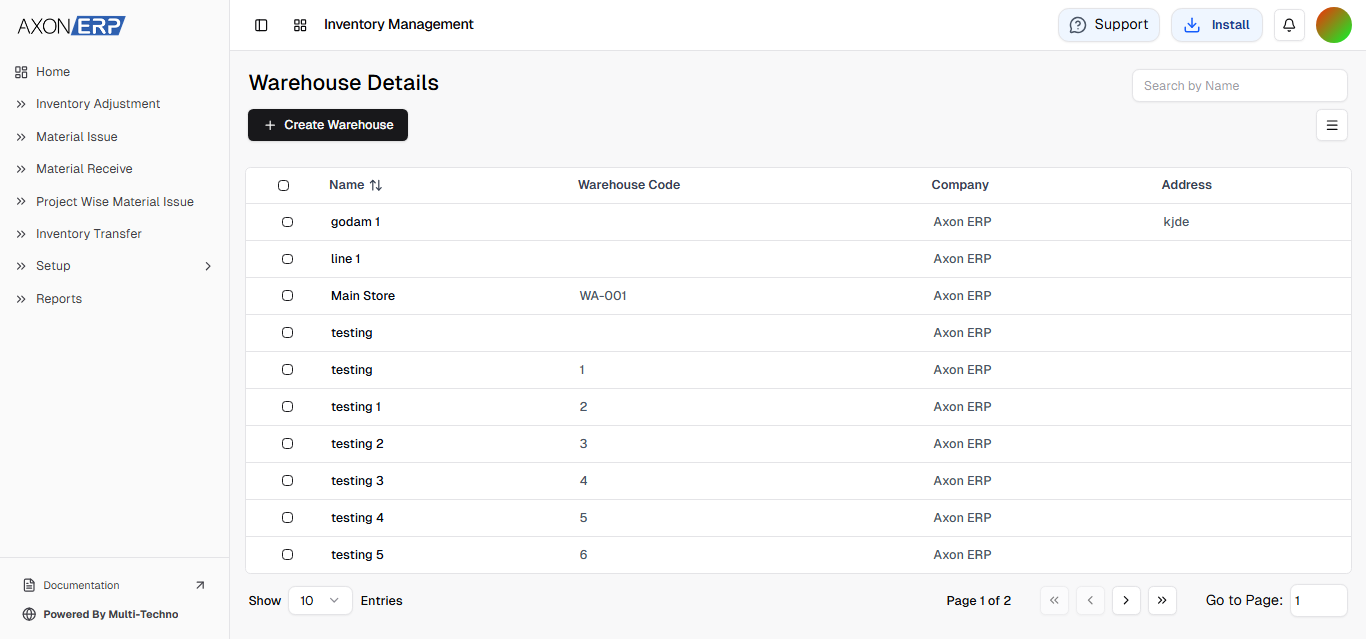
Modern ERP systems allow businesses to create and manage multiple warehouse locations.
Businesses can define:
- warehouse names
- warehouse codes
- branch association
- storage locations
- operational ownership
This improves inventory segregation and warehouse-level stock control.
Multi warehouse management becomes especially important for businesses operating across multiple cities or branches.
2. Inventory Tracking Across Warehouses
ERP warehouse systems provide real-time inventory tracking across all warehouse locations.
Businesses can monitor:
- available stock
- transferred stock
- issued inventory
- received inventory
- warehouse balances
- low stock levels
This improves inventory visibility and reduces operational confusion.
3. Inventory Transfer Management
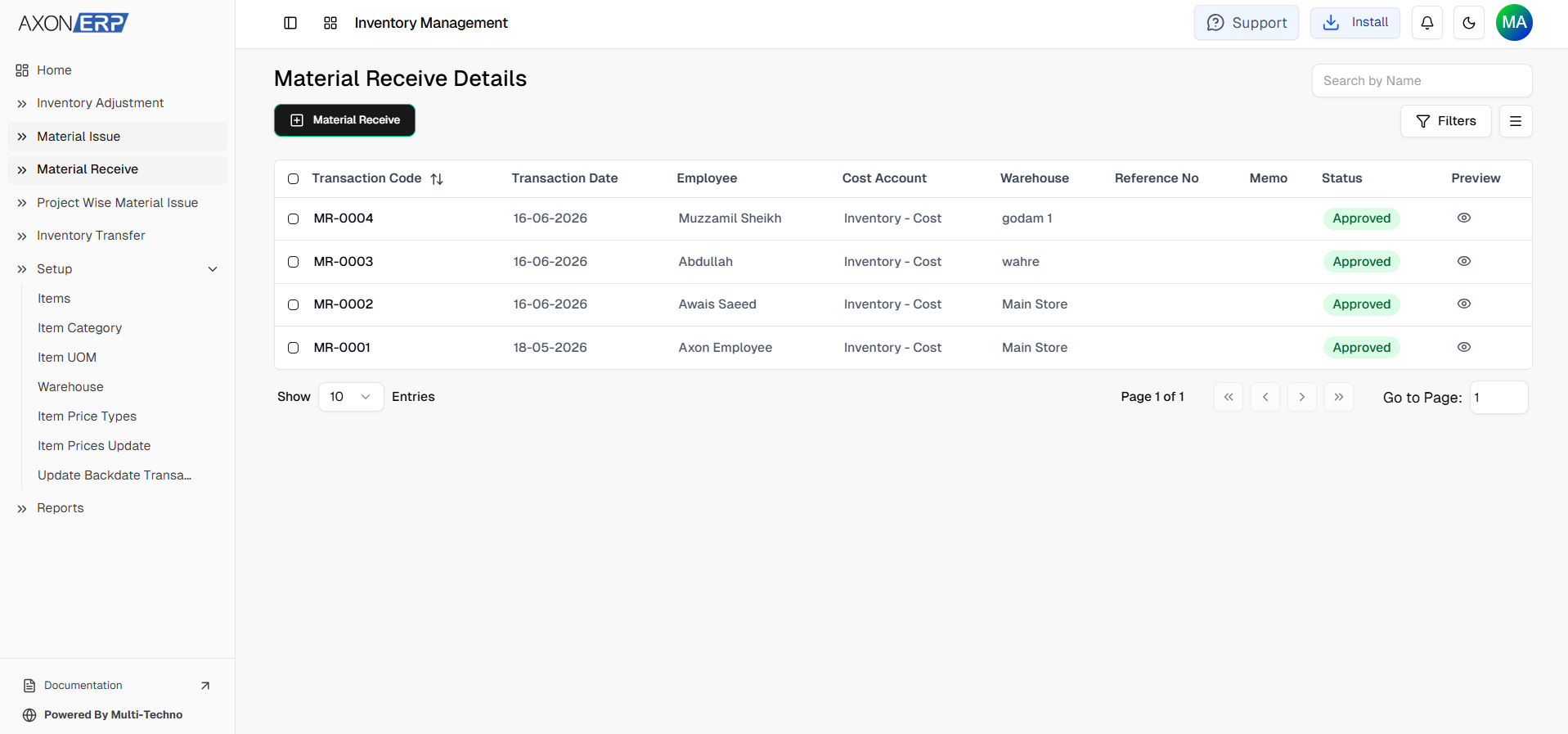
Warehouse management ERP systems allow businesses to transfer stock between warehouses efficiently.
Inventory transfers usually include:
- source warehouse
- destination warehouse
- transfer quantity
- item details
- transaction date
- reference numbers
This helps maintain accurate stock balances across all locations.
Businesses using an inventory management system often rely on warehouse transfers to improve inventory distribution and stock planning.
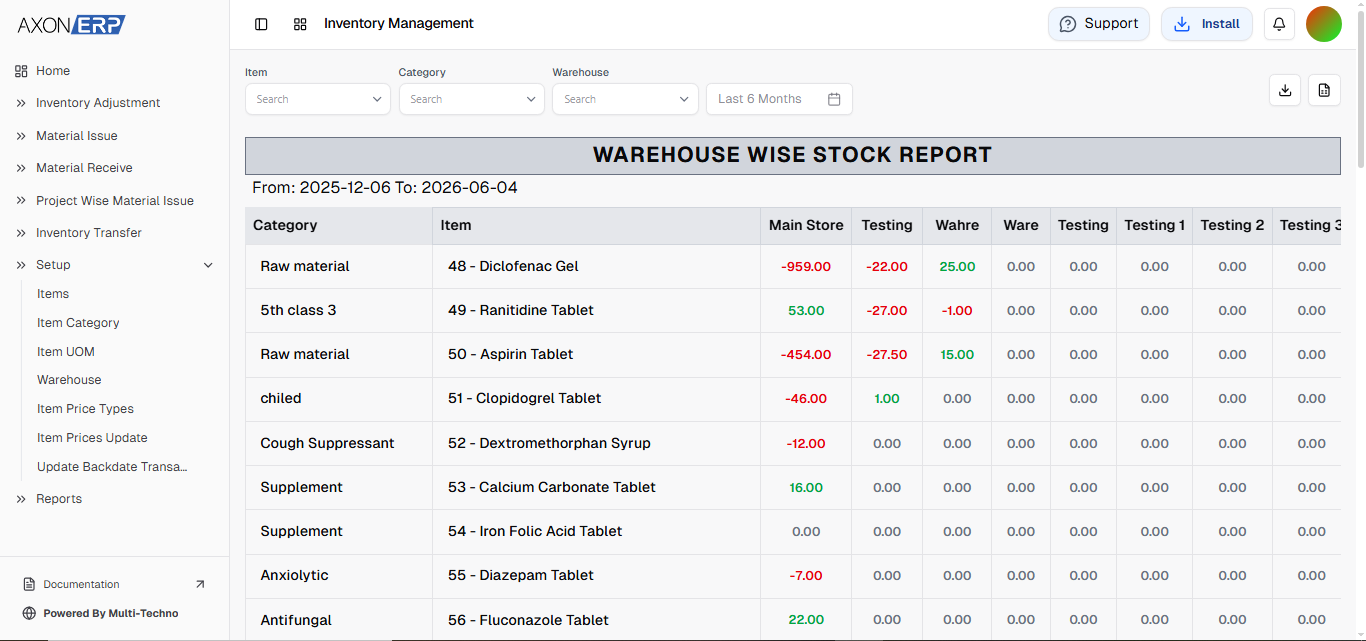
4. Warehouse-Level Inventory Reporting
ERP systems also provide warehouse-specific inventory reports.
Businesses can analyze:
- warehouse stock summary
- warehouse-wise inventory balances
- inventory movement
- stock shortages
- reorder requirements
- inventory valuation
These reports help businesses make better inventory planning decisions.
5. Warehouse Security & Access Control
Warehouse operations also require proper employee access control.
Businesses often use role management in ERP software to control which employees can:
- access warehouses
- approve inventory transfers
- adjust stock
- manage inventory reports
- process inventory transactions
This improves operational security and reduces inventory-related errors.
Warehouse Management in Axon ERP
Axon ERP provides a centralized warehouse management system that helps businesses control inventory across multiple locations efficiently.
Businesses can:
- create warehouses
- manage warehouse transfers
- track inventory movement
- monitor warehouse balances
- generate warehouse reports
- control warehouse-level operations
The system helps organizations maintain accurate stock visibility and improve warehouse coordination across departments.
Best Practices for Warehouse Management
To improve warehouse operations, businesses should:
- use standardized warehouse naming
- maintain accurate stock records
- review inventory balances regularly
- monitor warehouse transfers carefully
- control employee permissions
- track low stock alerts
- organize warehouse structures properly
- integrate warehouse operations with accounting and inventory systems
A properly managed warehouse system improves inventory accuracy and operational efficiency.
Final Thoughts
Warehouse management in Axon ERP software helps businesses maintain accurate inventory control across multiple locations.
A centralized warehouse inventory system improves stock visibility, inventory transfers, warehouse coordination, and operational efficiency.
As businesses grow, proper warehouse management becomes essential for maintaining organized inventory operations and accurate warehouse reporting.