


Post Detail
BackAxon ERP Official
2 hr ago
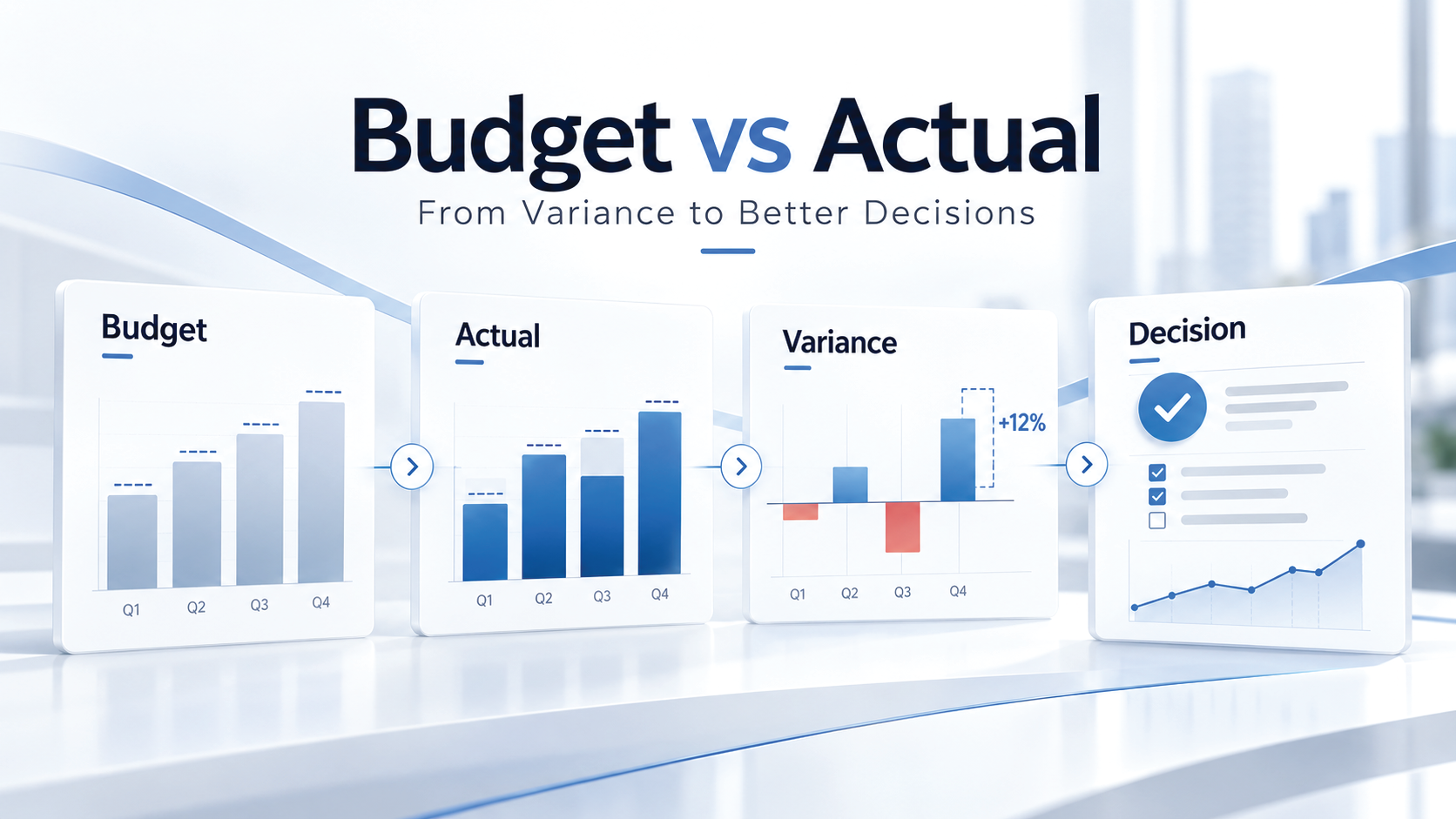
Budget vs Actual: Turning Financial Variance Into Better Business Decisions
A budget shows what a business expected to earn, spend, or achieve. Actual results show what really happened. Comparing the two reveals financial variance, helping businesses understand where performance differs from expectations and where management decisions may need to change.
What Does Budget vs Actual Mean?
Budget vs actual is a simple comparison between planned financial figures and the results recorded during a specific period.
For example, a business may budget Rs. 5 million in sales for a month but generate Rs. 4.3 million in actual sales. The Rs. 700,000 difference is a variance that deserves attention.
The important point is that the variance itself is not the final answer. It is a signal that something changed.
A lower-than-expected sales figure could result from weaker demand, delayed orders, pricing changes, stock availability, or the loss of an important customer. Similarly, expenses above budget could come from higher supplier prices, unexpected repairs, additional hiring, or increased operating activity.
This is why budget vs actual analysis is more useful when businesses look beyond the difference and investigate the reason behind it.
Why the Gap Between Budget and Actual Matters
A business can appear to be performing well when looking only at its actual numbers.
Suppose monthly sales are Rs. 10 million. That may sound positive. But if the business had planned for Rs. 13 million, the picture is different.
The gap between the two tells management that actual performance did not meet the original expectation.
The same applies to expenses. Spending Rs. 2 million may seem reasonable on its own, but if the budget was Rs. 1.4 million, the additional Rs. 600,000 needs to be understood.
Without this comparison, business owners may discover financial problems only after they have already affected cash flow or profitability.
Budget vs actual analysis helps answer questions such as:
- Did sales perform as expected?
- Which costs were higher than planned?
- Was gross profit close to the expected level?
- Did cash movement follow the plan?
- Were unexpected expenses responsible for the difference?
- Does the original budget still reflect current business conditions?
The objective is not simply to identify that numbers changed. It is to understand why they changed and what should happen next.
What Is Financial Variance?
Financial variance is the difference between a planned financial figure and the corresponding actual result.
For example:
Budgeted expense: Rs. 800,000
Actual expense: Rs. 950,000
Variance: Rs. 150,000
Depending on the situation, a variance can be favorable or unfavorable.
Higher-than-budgeted sales may be favorable, while higher-than-budgeted expenses may be unfavorable. However, the interpretation depends on the type of financial measure and the reason behind the change.
This is where variance analysis becomes useful, especially when businesses need to understand the financial information behind significant differences. Instead of treating every difference as a problem, management can investigate significant variances and determine whether they require action.
A small difference may have little practical impact. A large or recurring variance may indicate a pricing issue, cost increase, operational problem, inaccurate planning, or a change in market conditions.
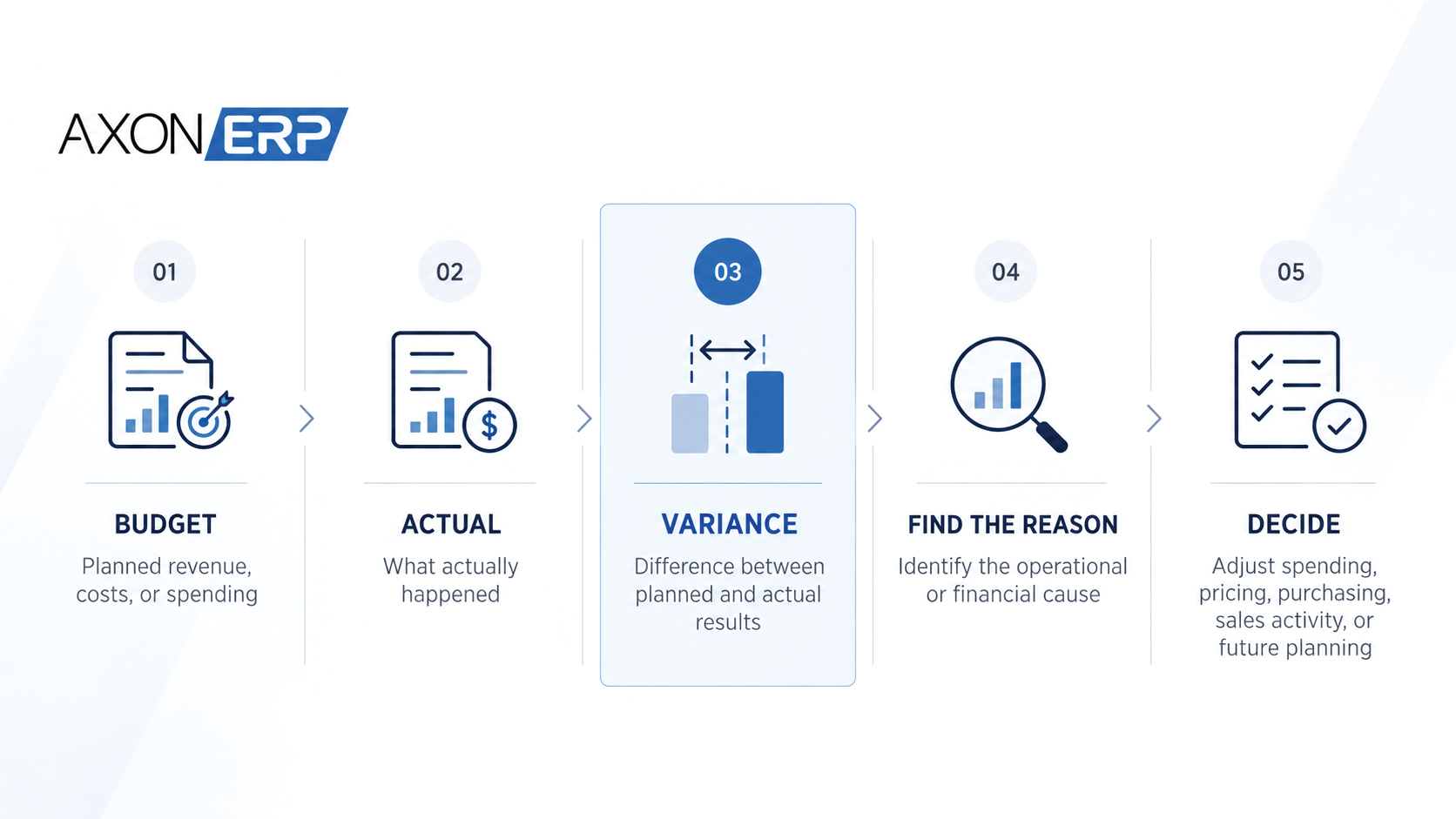
How to Read a Budget vs Actual Difference
A useful budget analysis should move through more than one question.
1. Identify the variance
Start by finding where the actual result differs from the budget.
For example:
- Sales are below budget.
- Purchase costs are above budget.
- Operating expenses are higher than expected.
- Profit is below the original forecast.
2. Measure the impact
Not every difference deserves the same level of attention.
A small expense variance may not materially affect the business. A significant revenue or cost variance could have a direct effect on profitability and cash flow.
3. Find the reason
This is often the most important step.
If purchase costs increased, management should investigate whether supplier prices changed, purchasing volume increased, or another operational factor caused the difference. This becomes easier when purchasing activity is managed through a centralized purchase management process.
If sales fell below budget, the business may need to look at customer orders, product demand, pricing, stock availability, or sales performance.
4. Decide whether action is required
Once the reason is understood, management can decide what to do.
The response might involve changing purchasing decisions, reviewing expenses, adjusting sales targets, improving inventory planning, or revising the next budget.
5. Use the finding for future planning
Budget vs actual analysis should improve future planning rather than simply explain the previous month.
Repeated variances can reveal that the original assumptions were unrealistic or that the business has changed.
Where Budget vs Actual Analysis Matters in a Business
Budget comparisons become more useful when they are applied to the areas that directly affect business performance.
Sales
A sales budget sets an expected revenue target. Comparing it with actual sales helps management understand whether revenue is developing according to plan.
A shortfall may require further investigation into customer demand, product performance, pricing, order volume, or sales activity. Sales performance can also be reviewed alongside operational information from a business's sales management process.
Purchases
Businesses can compare expected purchasing costs with actual costs to identify significant increases.
For a trading or distribution business, even a relatively small increase in purchasing costs can affect margins when it occurs across large volumes.
Operating Expenses
Rent, salaries, utilities, marketing, maintenance, and other operating expenses can be compared against their planned amounts.
Unexpected increases become easier to identify when actual expenses are reviewed against a defined budget rather than considered individually.
Cash Flow
Profit and cash are not the same thing.
A business may record sales but still experience pressure on cash because customers have not paid yet, while supplier payments and other expenses continue.
Comparing planned and actual cash movement can therefore highlight potential cash-flow problems earlier. This makes bank reconciliation an important part of maintaining confidence in the financial information being reviewed.
Profitability
Ultimately, management needs to know whether actual business performance is producing the expected level of profit.
Differences in sales, purchase costs, and operating expenses can all influence the final result.
Looking at these areas together provides a more useful picture than reviewing one number in isolation.
Why Manual Budget Tracking Becomes Difficult as a Business Grows
A small business may initially manage budgets using spreadsheets and manually collected figures.
That can work when transaction volumes are low.
As the business grows, however, actual financial information may come from multiple sources, making an integrated ERP environment more useful for connecting business data. Sales records, purchase transactions, expenses, customer payments, bank activity, and accounting records may all need to be brought together before management can compare them with the budget.
This creates several problems.
Data may be updated at different times. Figures may need to be copied between files. Errors can enter during manual consolidation. More importantly, management may spend more time preparing the numbers than actually analyzing them.
The problem is not necessarily the spreadsheet itself. The problem is having to manually connect financial information as the volume and complexity of the business increase.
How ERP Data Makes Budget vs Actual Analysis More Useful
Budget comparisons are only as useful as the actual financial data behind them.
If sales are recorded separately from accounting, purchases are maintained in another system, and expenses are tracked manually, management may struggle to establish a reliable financial picture.
An integrated ERP environment can connect business transactions with accounting records and financial reporting.
For example, a sales transaction can contribute to the financial records while purchase and expense transactions contribute to the corresponding accounts. This creates a more connected source of actual business data for financial analysis.
The goal is not simply to have more reports. It is to make the underlying financial information easier to access, understand, and use when comparing actual performance with business plans. This is also where real-time financial reporting can make financial performance easier to review as business activity changes.
How Axon ERP Supports the Financial Data Behind Better Decisions
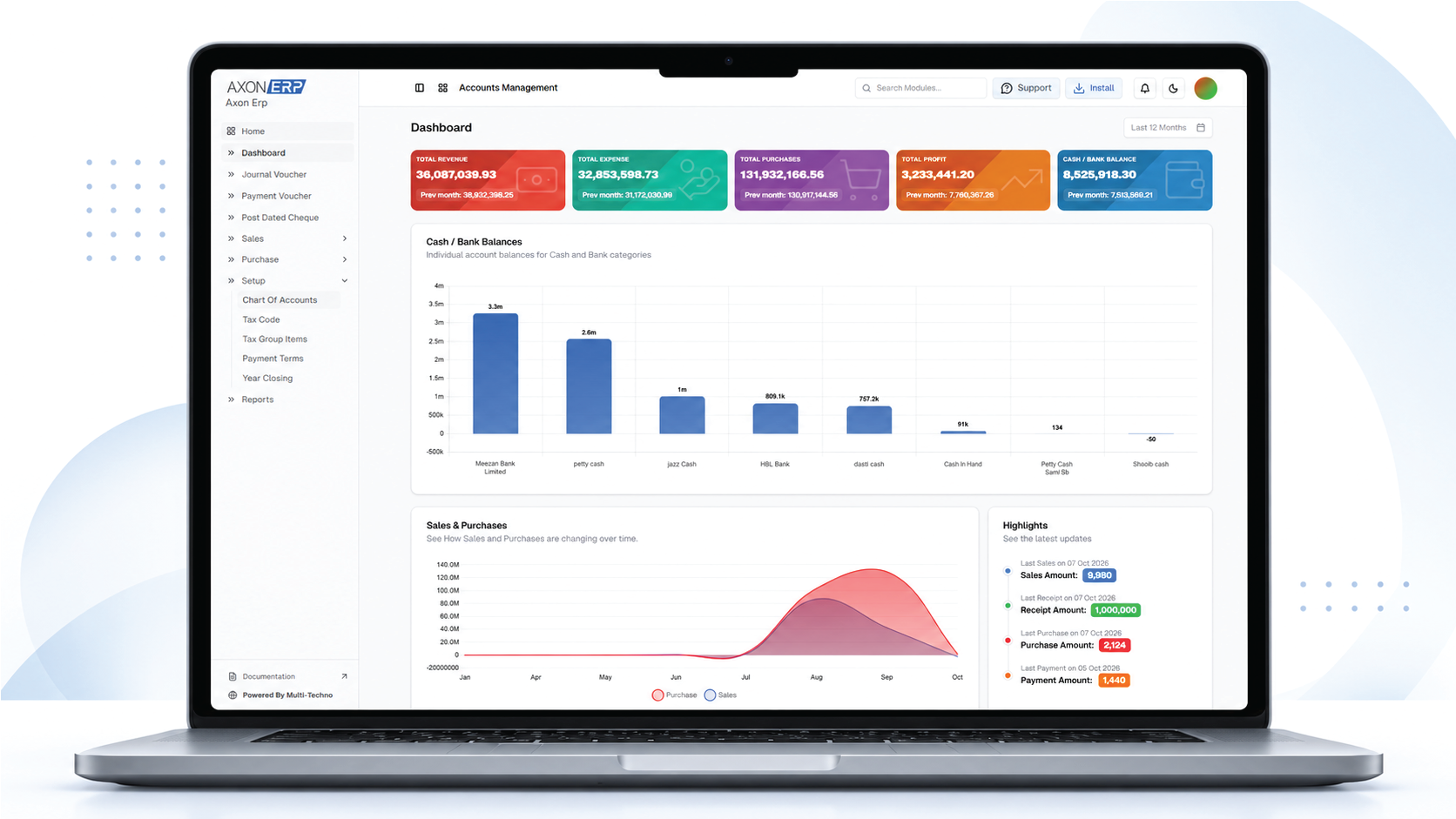
Axon ERP brings business operations and accounting into an integrated ERP environment, allowing financial activity to be recorded and reflected within the Finance & Accounts side of the system.
Its accounting functionality is based on double-entry accounting, with financial processes connected to relevant business transactions.
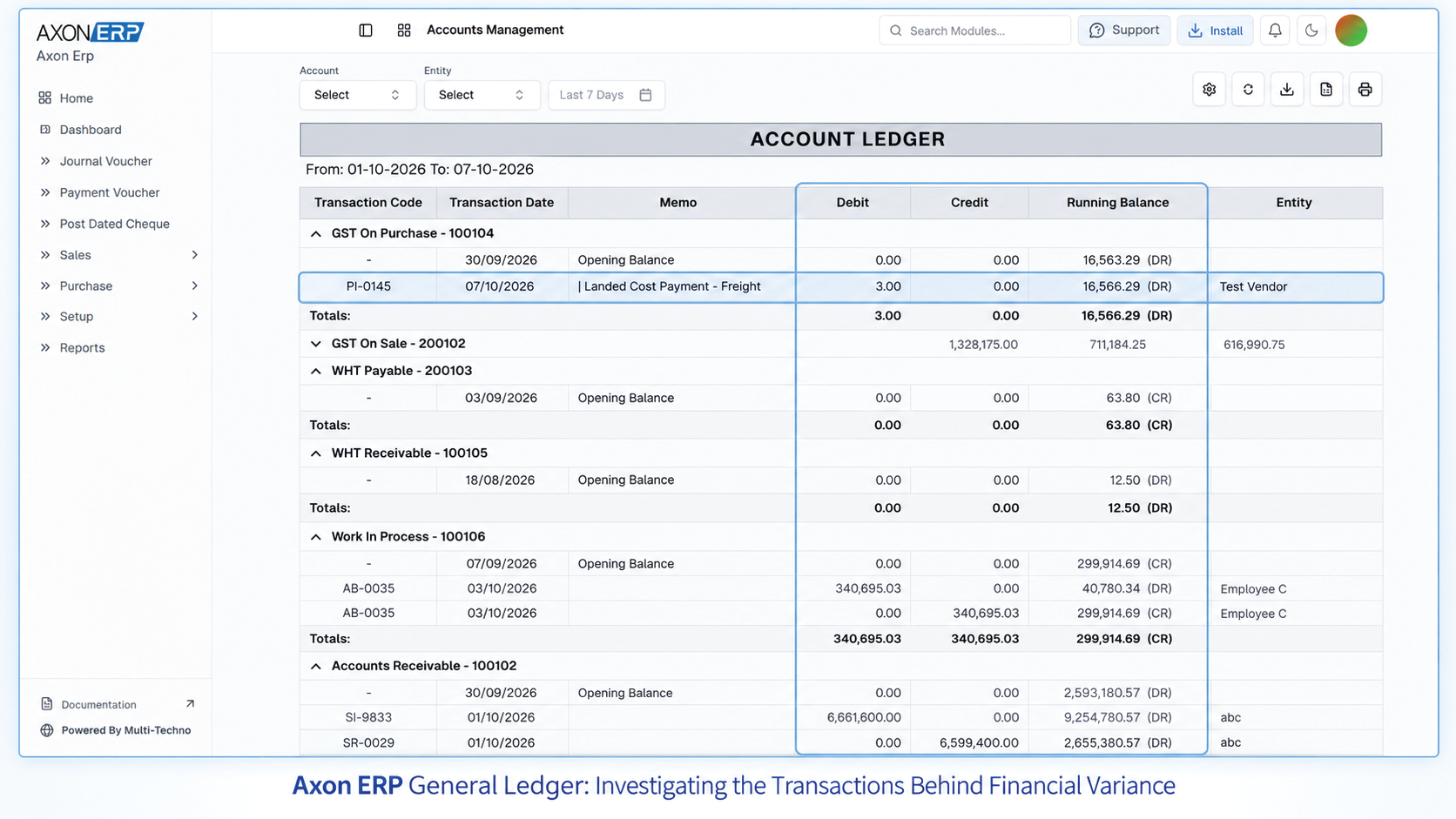
For businesses reviewing actual financial performance, reports such as the General Ledger, Profit & Loss, Balance Sheet, Cash Flow, and Trial Balance provide different views of the financial information recorded in the system.
Axon ERP also includes budgeting within its Finance module. Businesses can set annual budgets by account or cost center and track actual vs budget variance in real time.
This makes budget vs actual analysis more practical because management can compare planned figures with actual financial performance and then use financial reports to investigate the numbers behind a variance.
For businesses looking to improve the foundation of their financial reporting, Axon Finance & Accounts functionality provides the accounting, budgeting, and reporting environment needed to work with actual business data.
From Financial Variance to Better Business Decisions
The real value of budget vs actual analysis appears when a variance leads to a decision.
Consider a business that expected Rs. 10 million in monthly sales but recorded Rs. 8.5 million.
The first conclusion is simple:
Actual sales were Rs. 1.5 million below budget.
But management should not stop there.
The next questions could include:
- Which products contributed to the shortfall?
- Did some expected customer orders get delayed?
- Was inventory available when customers needed it?
- Did pricing changes affect sales?
- Was demand lower than expected?
- Is the same variance appearing across multiple months?
The answers determine the appropriate action.
The business may need to revise its sales assumptions, improve stock availability, review pricing, strengthen sales activity, or change the next forecast.
The same principle applies to expenses. If a business consistently spends more than planned, management can investigate the source and decide whether to control the cost, renegotiate with suppliers, change an operational process, or revise the original budget.
This is how financial variance becomes a management tool rather than just an accounting figure.
Budget vs Actual Is Not About Blaming the Numbers
A variance does not automatically mean that the business performed badly.
Budgets are based on assumptions. Market conditions, customer demand, supplier prices, staffing requirements, exchange rates, and unexpected events can all change those assumptions.
For example, sales exceeding budget can be a positive variance. A higher expense may also be justified if the business deliberately increased spending to support expansion.
The purpose of variance analysis is therefore not to make every difference disappear.
It is to understand what changed.
When management knows why actual results differ from the original plan, it can make more informed decisions about what to continue, what to change, and what assumptions need to be updated.
How Often Should Businesses Review Budget vs Actual?
There is no single review frequency that works for every business.
For many growing businesses, a monthly budget vs actual review provides a useful balance between timely information and manageable analysis.
Businesses with rapidly changing sales, costs, or cash requirements may need to review selected figures more frequently.
The important point is consistency.
A budget comparison performed once at the end of the financial year has limited value if significant problems could have been identified months earlier.
Regular reviews make it easier to identify recurring variances and determine whether they represent temporary changes or longer-term trends.
The Goal Is Better Financial Decisions, Not More Reports
A business does not become financially controlled simply because it has more reports.
The real value comes from connecting the numbers to decisions.
A useful budget vs actual process should help management move from:
“What happened?”
to:
“Why did it happen?”
and finally:
“What should we do about it?”
That is where financial reporting, accounting data, and business planning come together.
For growing businesses, having reliable actual financial information makes this process much easier. Instead of treating the budget as a document created once a year, management can use it as a reference point for reviewing performance and adjusting decisions throughout the year.
Frequently Asked Questions
What is budget vs actual analysis?
Budget vs actual analysis compares planned financial figures with the actual results recorded during a specific period. The difference is called a variance and can help management identify areas that require further investigation.
What is the difference between budget and actual?
A budget represents what a business expected to earn or spend, while actual figures represent what was actually recorded. Comparing them shows where business performance differed from the original plan.
What is budget variance?
Budget variance is the difference between a budgeted amount and the corresponding actual result. It can relate to revenue, expenses, profit, or other financial measures.
Why is budget variance important for businesses?
Budget variance helps businesses identify significant differences between expectations and actual performance. Understanding the reasons behind those differences can support better financial and operational decisions.
How can businesses use variance analysis?
Businesses can use variance analysis to identify unexpected changes in revenue, costs, expenses, or profitability, investigate their causes, and determine whether future plans or business actions need to change.
Can ERP software help with budget vs actual reporting?
ERP software can provide organized and connected actual financial data from business transactions, making it easier to review financial performance and compare results with planned figures.
Why does accurate accounting data matter for budget analysis?
Budget analysis depends on reliable actual figures. If sales, purchases, expenses, or other financial transactions are incomplete or inaccurate, the resulting comparison may lead management toward the wrong conclusions.
Make Your Financial Data More Useful With Axon ERP
Budgeting is only the starting point. The real value comes from comparing expectations with actual performance, understanding the variance, and using that information to make better decisions.
Axon ERP connects business operations with integrated accounting and financial reporting, giving growing businesses a clearer view of their actual financial position.
Explore Axon ERP or request a demo to see how its Finance & Accounts capabilities can support your business's financial management.