

Post Detail
BackAxon ERP Official
12 weeks ago
Why Retail Businesses Lose Money Without Proper Purchase & Inventory Control
Running a Busy Retail Store Doesn't Always Mean You're Making More Money
Many retail businesses focus on increasing sales, attracting more customers, and expanding their product range. While these are important goals, they often overlook one of the biggest factors affecting profitability: purchase and inventory control.
A retail store can generate healthy daily sales and still lose money behind the scenes. The reason is simple. Every product that enters your business passes through multiple stages purchasing, receiving, storing, selling, transferring, and sometimes returning. If any of these stages aren't properly managed, small mistakes begin to accumulate.
One supplier ships fewer items than invoiced. Another delivery contains damaged products. Staff reorder items that are already sitting in another warehouse. Fast-moving products go out of stock, while slow-moving inventory continues to occupy valuable shelf space. Individually, these issues may seem minor, but together they reduce profitability, tie up working capital, and make inventory increasingly difficult to manage.
The challenge isn't always selling more products, it's making sure every product purchased contributes to profit instead of becoming an unnecessary business expense.
Why Purchase and Inventory Problems Are So Difficult to Detect
Unlike a missed sale, inventory losses usually happen quietly.
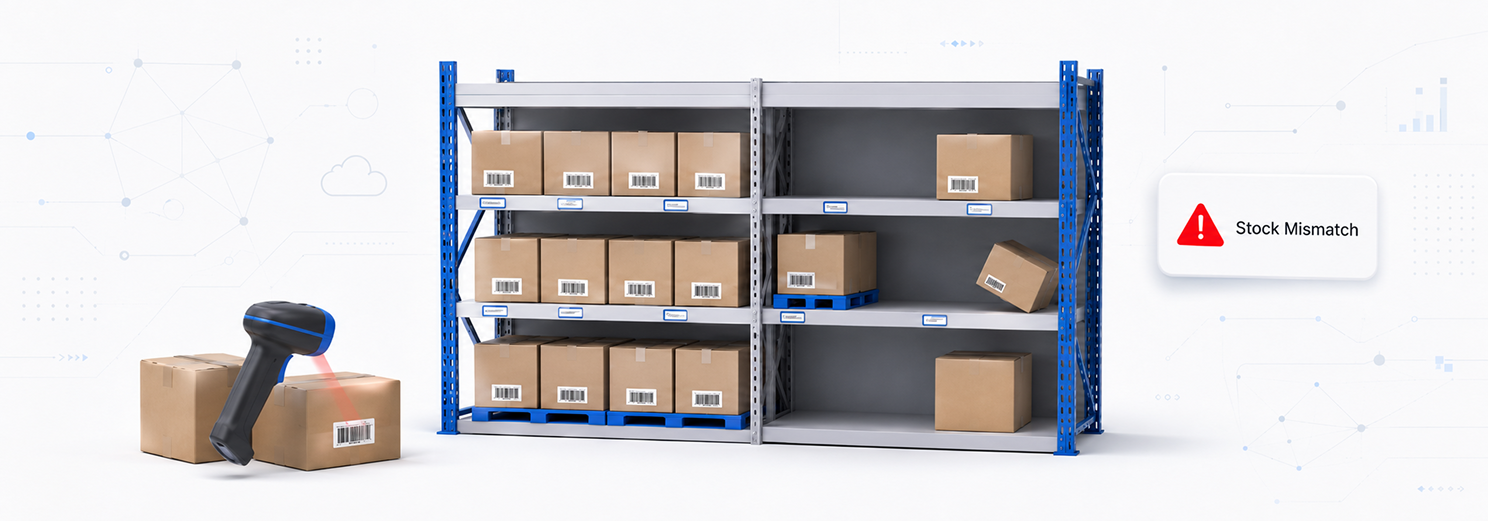
Imagine a customer visits your store looking for a popular product. Your system shows five units available, but the shelf is empty. The sales team assumes the stock was sold, while the purchasing team immediately places another order to avoid losing future sales.
A few days later, those "missing" products are found in another storage area after the new shipment has already arrived. Instead of solving the shortage, the business now has excess inventory, additional purchasing costs, and cash tied up in products that weren't actually needed.
This is exactly how many retail businesses lose money not through one major mistake, but through dozens of small operational errors that go unnoticed every day.
Common problems include:
- Inventory records that don't match physical stock.
- Duplicate purchasing because existing inventory isn't visible.
- Overstocking slow-moving products while fast-selling items remain unavailable.
- Supplier deliveries that don't match purchase documents.
- Difficulty identifying where inventory losses actually occurred.
- Purchasing decisions based on inaccurate inventory information.
As the business grows, these problems become harder to track because purchasing, warehouse, finance, and sales teams often work with different information.
The Real Cost of Poor Purchase and Inventory Control
Most retailers associate inventory losses with theft or damaged products, but those are only part of the picture.
Poor purchasing decisions create costs long before products reach customers.
Buying inventory too early increases storage expenses and locks cash into products that may not sell for weeks or months. Receiving incorrect quantities without proper verification affects stock accuracy from the very beginning. If supplier invoices aren't matched against received goods, businesses may end up paying for products they never actually received.
The impact extends beyond inventory itself. Inaccurate stock records lead to emergency purchasing, delayed supplier reconciliation, unnecessary warehouse movements, and poor forecasting for future demand.
Over time, businesses experience:
- Lower profit margins despite stable sales.
- Reduced inventory turnover.
- Higher carrying costs.
- Frequent stock shortages.
- Cash flow pressure caused by excess inventory.
- Supplier disputes over deliveries and invoices.
- Poor visibility into purchasing performance.
Many retailers try to solve these issues by hiring more staff or maintaining additional spreadsheets. In reality, the problem usually isn't a lack of effort it's a lack of connected processes.
What High-Performing Retail Businesses Do Differently
Successful retailers don't eliminate purchasing or inventory challenges. They build systems that prevent small mistakes from turning into expensive problems.
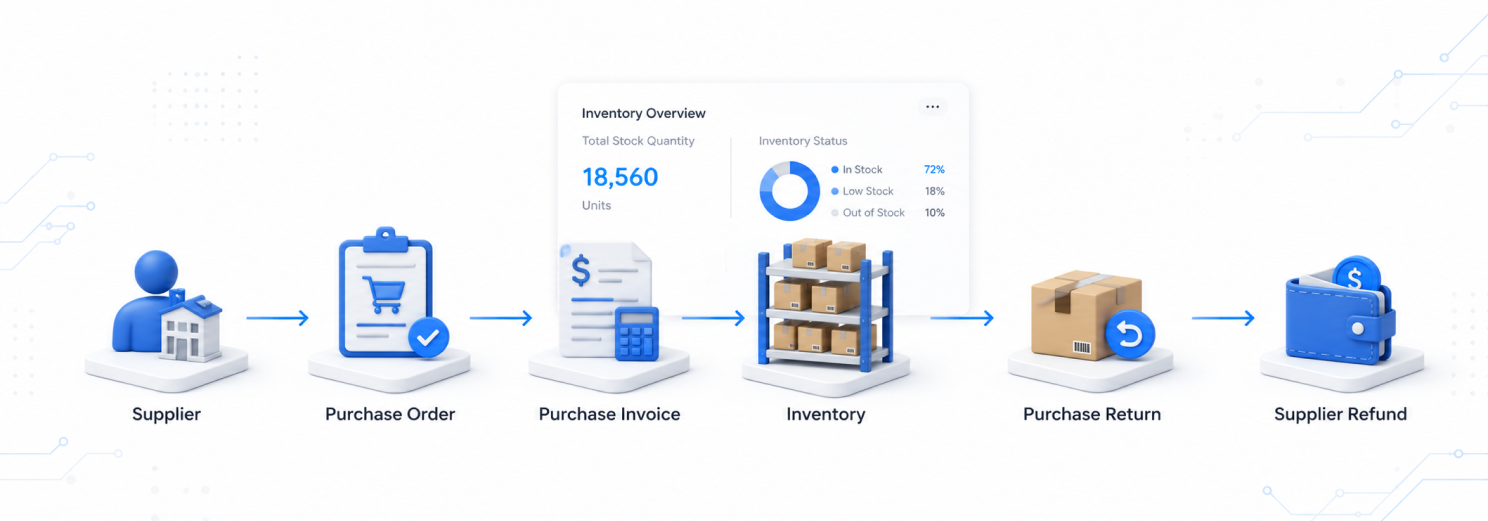
Instead of treating purchasing, receiving, inventory, and supplier management as separate activities, they connect them into a structured workflow where every inventory movement can be verified and traced.
Before placing new orders, purchasing teams verify existing stock. Products are received only after quantities are checked. Supplier deliveries are matched against approved purchase orders before moving to the next stage of the procurement process.
From this point onward, every transaction follows a controlled workflow instead of relying on manual communication between departments.
How an ERP System Brings Purchasing and Inventory Together
The biggest reason retail businesses struggle with inventory isn't a lack of effort it's disconnected information.
Purchasing teams often maintain supplier records separately. Warehouse staff update stock manually. Finance verifies invoices in another system. Sales teams depend on inventory figures that may already be outdated.
When every department works with different information, even simple purchasing decisions become risky.
An ERP system connects these business functions into one workflow, allowing every department to work from the same data instead of maintaining separate records. As inventory moves through purchasing, receiving, warehousing, and sales, each transaction is recorded in a single system, reducing manual work and improving operational visibility.
Better Purchasing Starts Before Products Reach Your Warehouse
Retail businesses often assume inventory control begins when products arrive at the warehouse.
In reality, it begins much earlier.
Every purchasing decision should start with approved suppliers, accurate stock availability, and properly documented purchase orders before any inventory is received.
When purchasing follows a structured process, businesses reduce duplicate buying, improve supplier communication, and create a clear purchasing history that can be verified throughout the procurement cycle.
Accurate Inventory Depends on Verified Supplier Deliveries
Receiving inventory without verification creates problems that continue throughout the entire supply chain.
If delivered quantities differ from what was ordered, or supplier invoices are processed without proper validation, inventory records quickly become unreliable. Purchasing teams may believe stock is available while warehouse staff report shortages, creating confusion across departments.
Maintaining accurate purchase invoices helps businesses ensure that inventory records, supplier balances, and purchasing costs remain synchronized from the moment goods are received.
Every Supplier Mistake Should Be Recorded Properly
Not every supplier delivery is perfect.
Products may arrive damaged, incorrect items may be shipped, or received quantities may not meet the original order. Without a structured process, these situations often result in inventory discrepancies and supplier payment disputes.
Instead of relying on manual records, businesses should document supplier returns through a controlled purchase return process that keeps inventory, supplier accounts, and financial records aligned throughout the transaction.
Inventory Visibility Is What Protects Retail Profitability
Retail businesses don't lose money because inventory exists.
They lose money because they don't always know where inventory is, how much is actually available, or whether purchasing decisions are based on accurate information.
Having complete visibility across warehouses, stock movements, purchasing activity, and inventory availability allows management to make better decisions while reducing unnecessary purchasing costs.
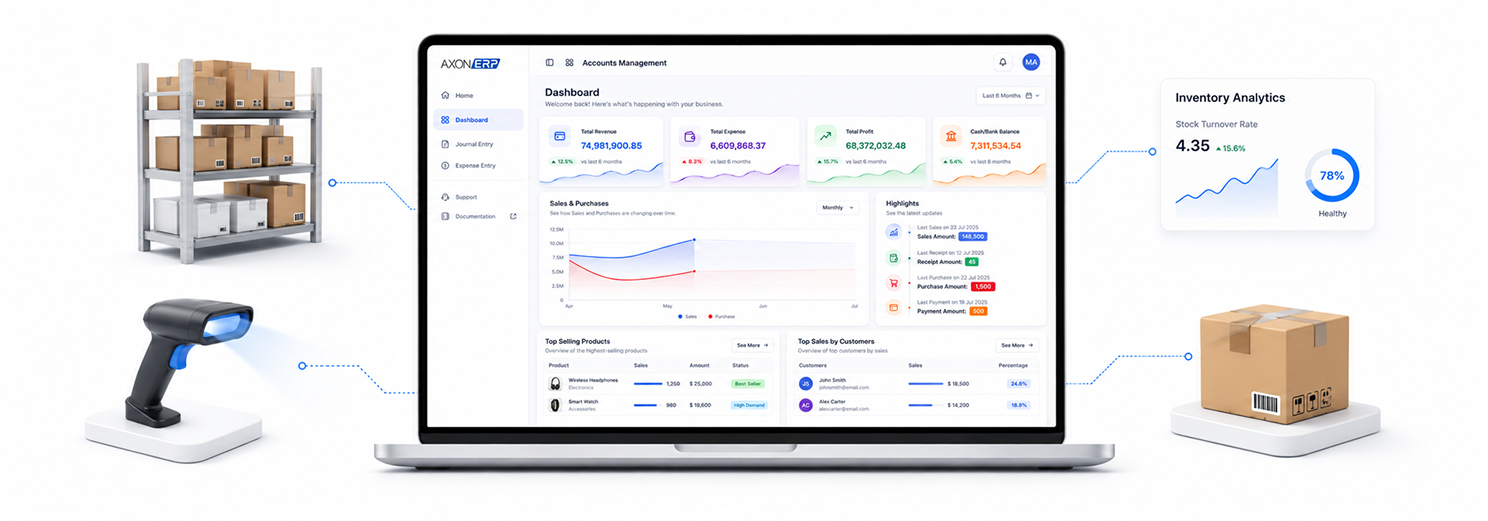
A centralized inventory management system provides that visibility by keeping purchasing, warehouse operations, and inventory records connected within one platform.
How Axon ERP Helps Retail Businesses Reduce Inventory Losses
Axon ERP combines purchasing, inventory, warehouse management, supplier management, and accounting into a single connected workflow designed to improve operational control.
Instead of switching between multiple spreadsheets or disconnected applications, businesses can manage supplier records, create purchase orders, verify supplier invoices, receive inventory, process returns, monitor stock availability, and track purchasing performance from one centralized platform.
Because every transaction remains connected, management gains greater visibility into purchasing activities while reducing duplicate work, inventory discrepancies, and supplier-related issues. This allows retailers to make purchasing decisions using reliable business data instead of assumptions.
Final Thoughts
Retail profitability isn't determined only by how many products are sold.
It also depends on how efficiently products are purchased, received, stored, monitored, and, when necessary, returned.
Businesses that invest in structured purchasing and inventory processes reduce unnecessary costs, improve supplier relationships, maintain more accurate inventory records, and make better decisions using reliable operational data.
For growing retailers, connected business processes are no longer a competitive advantage they're a necessity. By bringing purchasing, inventory, warehouse operations, and finance together in one system, Axon ERP helps businesses reduce inventory losses and build a stronger foundation for long-term, sustainable growth.