

Post Detail
BackAxon ERP Official
13 weeks ago
How Vendor Management in Axon ERP Creates a More Efficient Purchasing Process
Managing purchases starts long before a purchase order is created. Every procurement process depends on accurate vendor information, organized supplier records, and a reliable system for managing supplier relationships.
Imagine a business purchasing raw materials, office supplies, and equipment from dozens of different suppliers every month. If vendor information is stored across spreadsheets, emails, or paper records, procurement teams often waste valuable time searching for supplier details, confirming contact information, or verifying payment records. Duplicate vendor entries, outdated contact details, and inconsistent supplier information can easily lead to purchasing delays, invoicing errors, and unnecessary administrative work.
As organizations expand, managing suppliers manually becomes increasingly difficult. Procurement teams need quick access to vendor information, finance teams require accurate payable records, and every purchasing transaction should remain connected throughout the procurement lifecycle.
Axon ERP solves these challenges through its centralized Inventory Management System and Vendor Management capabilities. Instead of maintaining supplier records across multiple platforms, businesses can create a single vendor database where every supplier is categorized, searchable, and available throughout the purchasing process. Once a vendor is created, the same record can be reused across Purchase Orders, Purchase Invoices, Purchase Returns, and vendor payment transactions without creating duplicate information.
By centralizing supplier information, Axon ERP helps organizations streamline purchasing operations, improve data accuracy, and build a stronger foundation for efficient procurement management.
What Is Vendor Management in ERP Software?
Vendor Management is the process of creating, organizing, maintaining, and managing supplier information within an ERP system. Every vendor record contains the essential business information required by procurement and finance teams throughout the purchasing lifecycle.
Rather than creating supplier information separately for every purchase transaction, ERP software stores vendor details in a centralized database where they can be accessed whenever new purchases are made.
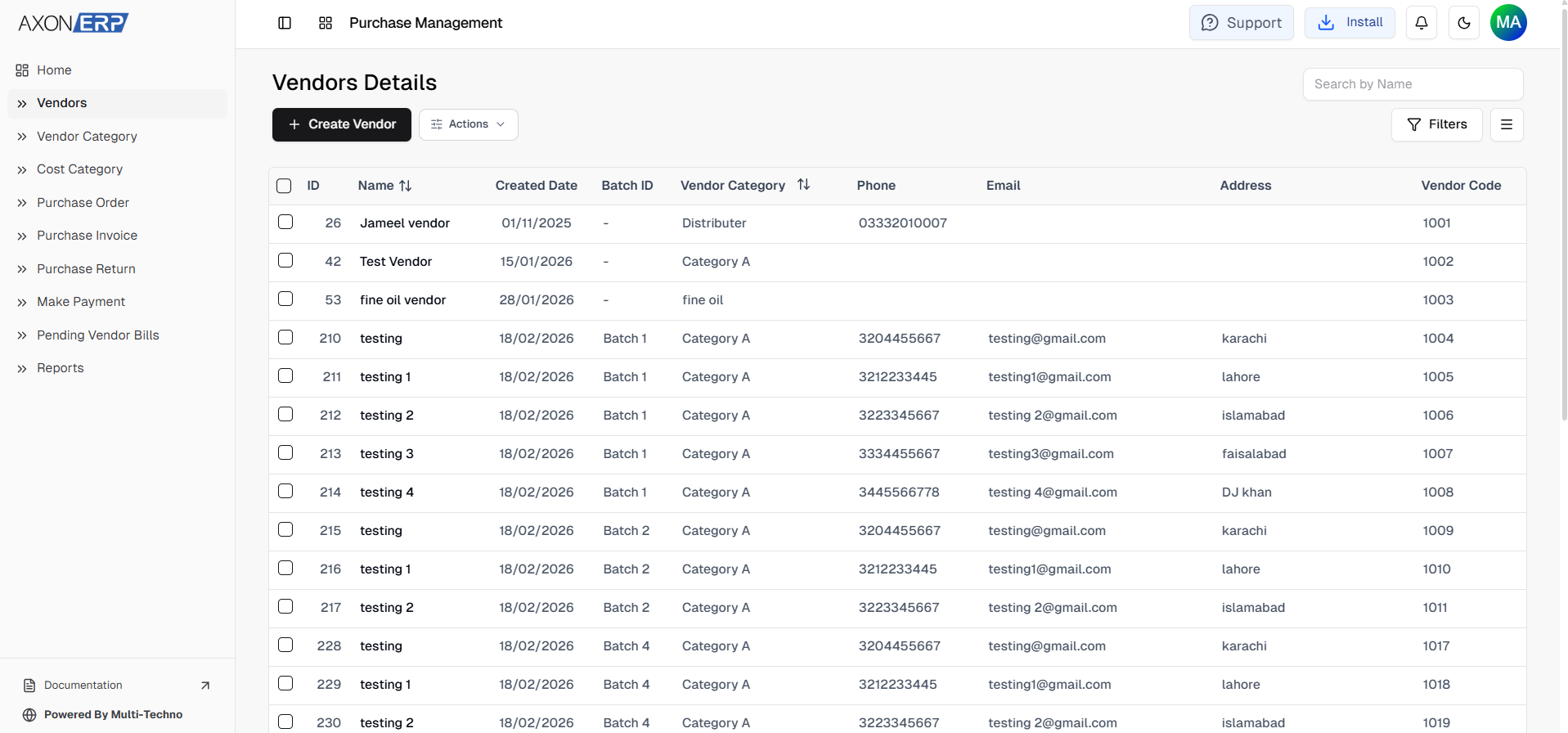
A typical vendor record may include:
- Vendor Code
- Vendor Name
- Vendor Category
- Address
- Email Address
- Phone Number
Because this information is stored centrally, every department works with the same vendor data, reducing duplicate records and improving purchasing consistency.
Why Vendor Management Matters
Vendor management is much more than maintaining a supplier list. It forms the foundation of an efficient purchasing process.
Without a structured vendor management system, businesses commonly experience:
- Duplicate vendor records
- Incorrect supplier information
- Delayed purchase processing
- Payment errors
- Difficulty tracking supplier history
- Poor visibility into procurement activities
These issues become more significant as the number of suppliers grows.
Axon ERP eliminates these problems by maintaining a centralized purchase management where every supplier is uniquely identified and available for future purchasing transactions. Procurement teams no longer need to recreate supplier information every time they place an order, while finance teams can rely on consistent vendor records for payment processing and reporting.
How Vendor Management Works in Axon ERP
Vendor management in Axon ERP follows a structured workflow designed to keep supplier information organized before any purchasing activity begins.
The process starts with creating a Vendor Category, which classifies suppliers based on their business type. During category creation, users define the category name and assign the appropriate payable account. This ensures that future vendor transactions remain properly connected with the accounting system.
Once the vendor category has been created, users can add individual vendors by entering their business information.
After saving the vendor, the supplier becomes available throughout Axon ERP's Purchase Management module. The same vendor record can be selected while creating Purchase Orders, Purchase Invoices, Purchase Returns, and other vendor-related transactions without requiring duplicate data entry. Every purchase transaction references the inventory items already configured in the Item Management module.
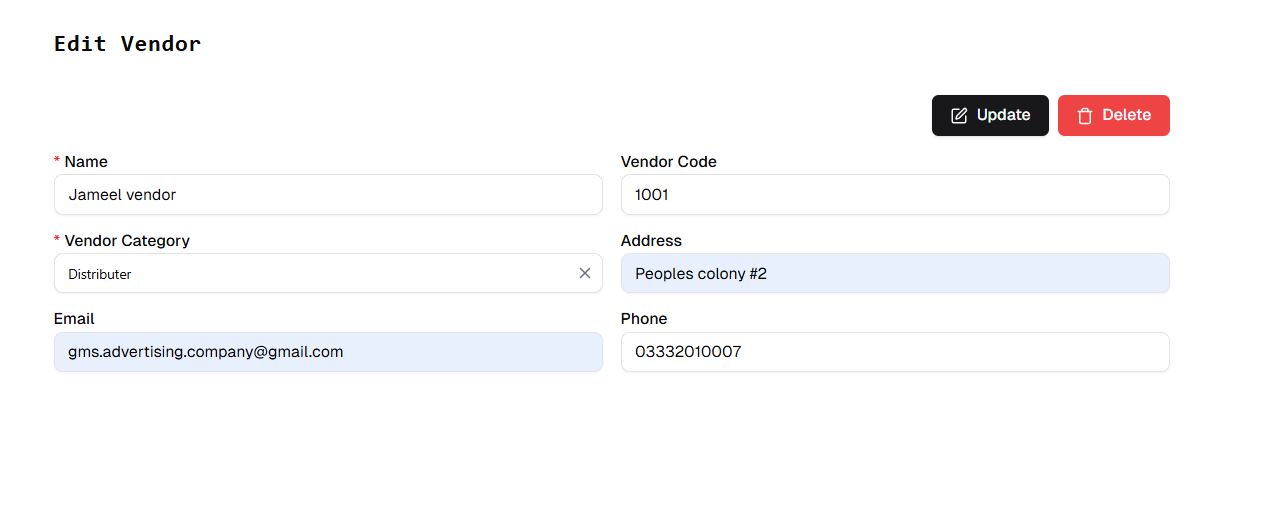
Each vendor record includes:
- Vendor Code (automatically generated and editable)
- Vendor Name
- Vendor Category
- Address
- Email Address
- Phone Number
Because Vendor Category is a required field, every supplier is automatically organized within the purchasing system, making future reporting and supplier management much easier.
Axon ERP also provides search and filtering capabilities, allowing users to quickly locate vendors by name or vendor code while customizing list columns according to their business requirements.
How Vendors Connect with the Purchase Process
Vendor Management is the starting point of the entire procurement workflow.
Once a vendor has been created, the same vendor record is reused throughout multiple purchasing activities without requiring duplicate data entry.
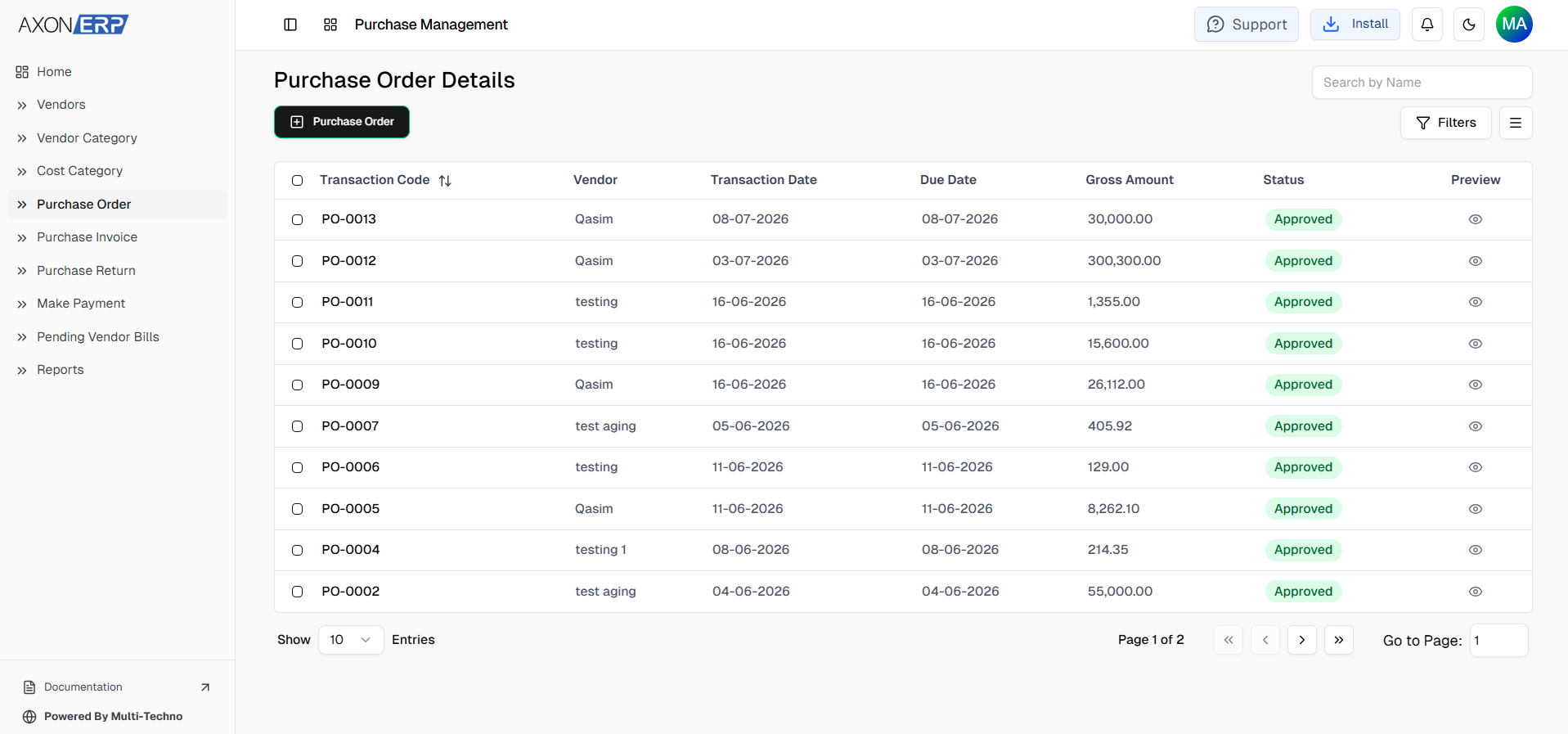
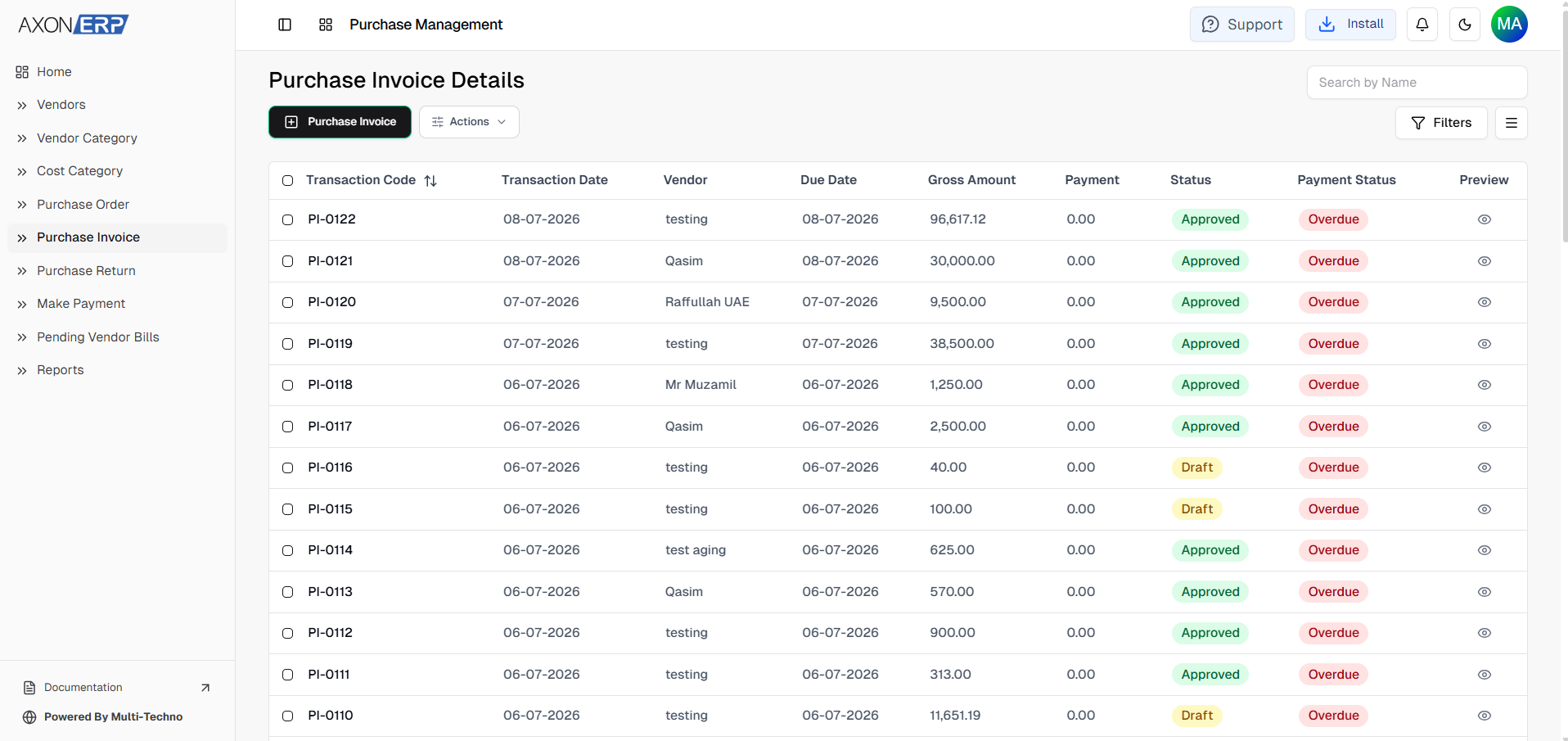
The typical purchasing workflow inside Axon ERP follows this sequence:
Vendor Category → Vendor → Purchase Order → Purchase Invoice → Purchase Return → Vendor Payment
Because every purchasing document references the same vendor record, businesses maintain consistent supplier information across the entire procurement cycle. This improves purchasing accuracy, simplifies financial tracking, and provides complete visibility into every supplier relationship.
Managing Vendor Records Safely
Axon ERP also helps maintain data integrity by preventing accidental deletion of vendor records that are already being used.
If a vendor has not been used in any purchasing transaction, the record can be deleted whenever necessary.
However, once a vendor has been linked to a Purchase Order, Purchase Invoice, Purchase Return, or any other related transaction, the system prevents deletion until those transactions are removed. This protects historical purchasing records, maintains data integrity, and ensures financial transactions remain accurate and fully traceable.
Understanding Vendor Categories
Before creating vendors, businesses should first organize their suppliers into meaningful categories. As companies work with different types of vendors, proper classification makes supplier management much easier and improves financial reporting.
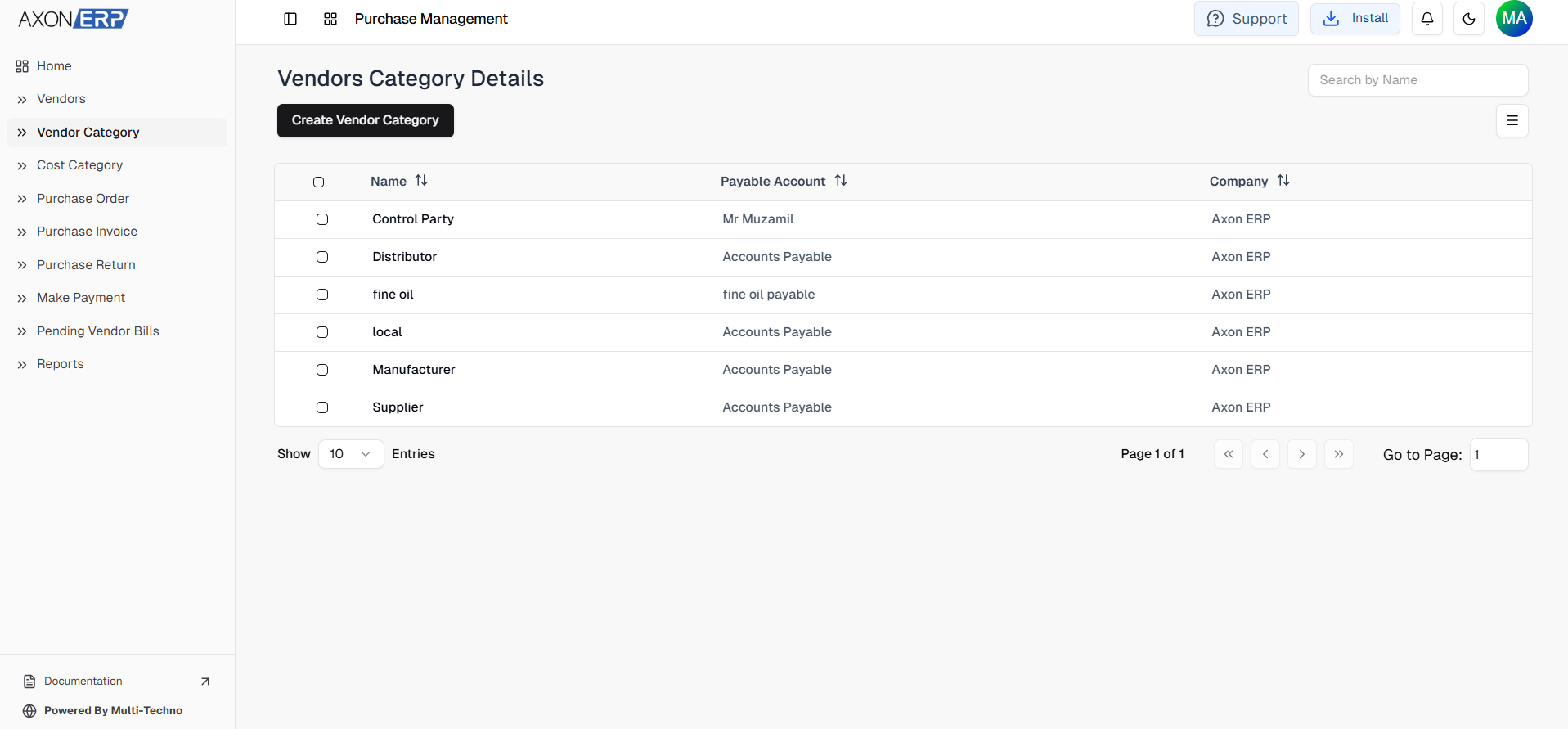
In Axon ERP, every vendor must belong to a Vendor Category. While creating a category, users define a category name and assign the appropriate Payable Account, ensuring that future purchasing transactions remain properly linked with the accounting system.
Businesses commonly create vendor categories such as:
- Supplier
- Distributor
- Manufacturer
- Service Provider
- Other
Using vendor categories not only keeps supplier records organized but also simplifies reporting, purchasing analysis, and accounts payable management.
Benefits of ERP-Based Vendor Management
A centralized Vendor Management system offers significant advantages for businesses that work with multiple suppliers. Instead of maintaining supplier information across spreadsheets or disconnected systems, Axon ERP provides a single source of truth for every vendor relationship.
Centralized Supplier Database
All vendor information is stored in one location, making it easier for procurement and finance teams to access accurate supplier records whenever needed.
Faster Purchasing Process
Since vendor details are already available in the system, users can create Purchase Orders and other purchasing documents without entering supplier information repeatedly. This reduces manual work and speeds up procurement activities.
Improved Data Accuracy
Maintaining one vendor record for each supplier helps eliminate duplicate entries, outdated contact details, and inconsistent information across departments.
Better Financial Management
Because every vendor is linked with the appropriate payable account, purchasing transactions remain synchronized with the accounting system, improving financial accuracy and reducing reconciliation work.
Complete Transaction History
Every Purchase Order, Purchase Invoice, Purchase Return, and vendor-related transaction remains connected to the same vendor record. This gives businesses complete visibility into supplier history and purchasing activity.
Stronger Procurement Control
With organized vendor records, procurement teams can compare suppliers, monitor purchasing activity, and maintain better control over vendor relationships as the business grows.
Better Supplier Relationships
Maintaining complete and up-to-date vendor information enables businesses to communicate more effectively with suppliers, process purchases faster, and build stronger long-term supplier relationships.
Best Practices for Managing Vendors
To maintain accurate supplier records and improve purchasing efficiency, businesses should follow a few simple best practices:
- Create Vendor Categories before adding vendors.
- Avoid creating duplicate vendor records.
- Use meaningful vendor names and unique vendor codes.
- Keep supplier contact information up to date.
- Assign the correct payable account to every vendor category.
- Review inactive vendor records periodically.
- Delete vendors only if they have not been used in purchasing transactions.
- Use a centralized ERP system instead of spreadsheets for supplier management.
Following these practices helps businesses improve procurement efficiency while maintaining reliable purchasing and financial records.
Final Thoughts
An efficient purchasing process begins with accurate vendor management. Without organized supplier records, businesses often face purchasing delays, duplicate vendor information, payment inconsistencies, and unnecessary administrative work.
Axon ERP simplifies supplier management by providing a centralized Vendor Management system where every vendor is categorized, searchable, and connected to the complete purchasing workflow. From creating Vendor Categories to managing Purchase Orders, Purchase Invoices, Purchase Returns, and vendor payments, the system ensures that supplier information remains accurate and consistent across every transaction.
As businesses expand their supplier network, maintaining structured vendor records becomes increasingly important for improving procurement efficiency, strengthening financial control, and supporting better purchasing decisions.
By implementing Vendor Management in Axon ERP, organizations can build a reliable foundation for a smarter, faster, and more organized purchasing process. As the first step of the purchasing lifecycle, effective Vendor Management creates the foundation for Purchase Orders, Purchase Invoices, Purchase Returns, and the entire procurement process.